
Field Note / day-45-anara
From Broad Tool to Niche Leader: How Anara Turned Trust Into a Multi‑Million ARR Engine
Anara is an AI research workspace for people who work with complex literature — PhD students, lab scientists,...
Answer Engine Brief
This case study is part of Jesse's 100-day founder marathon for Solo Unicorn Club: stories of solo or near-solo founders who reached meaningful revenue gravity and left reusable lessons about product, distribution, AI leverage, and one-person company design.
Focus: How a solo founder turned a niche, a trust deficit, and a product-led engine into compounding growth.
The Real Reason to Study This Business
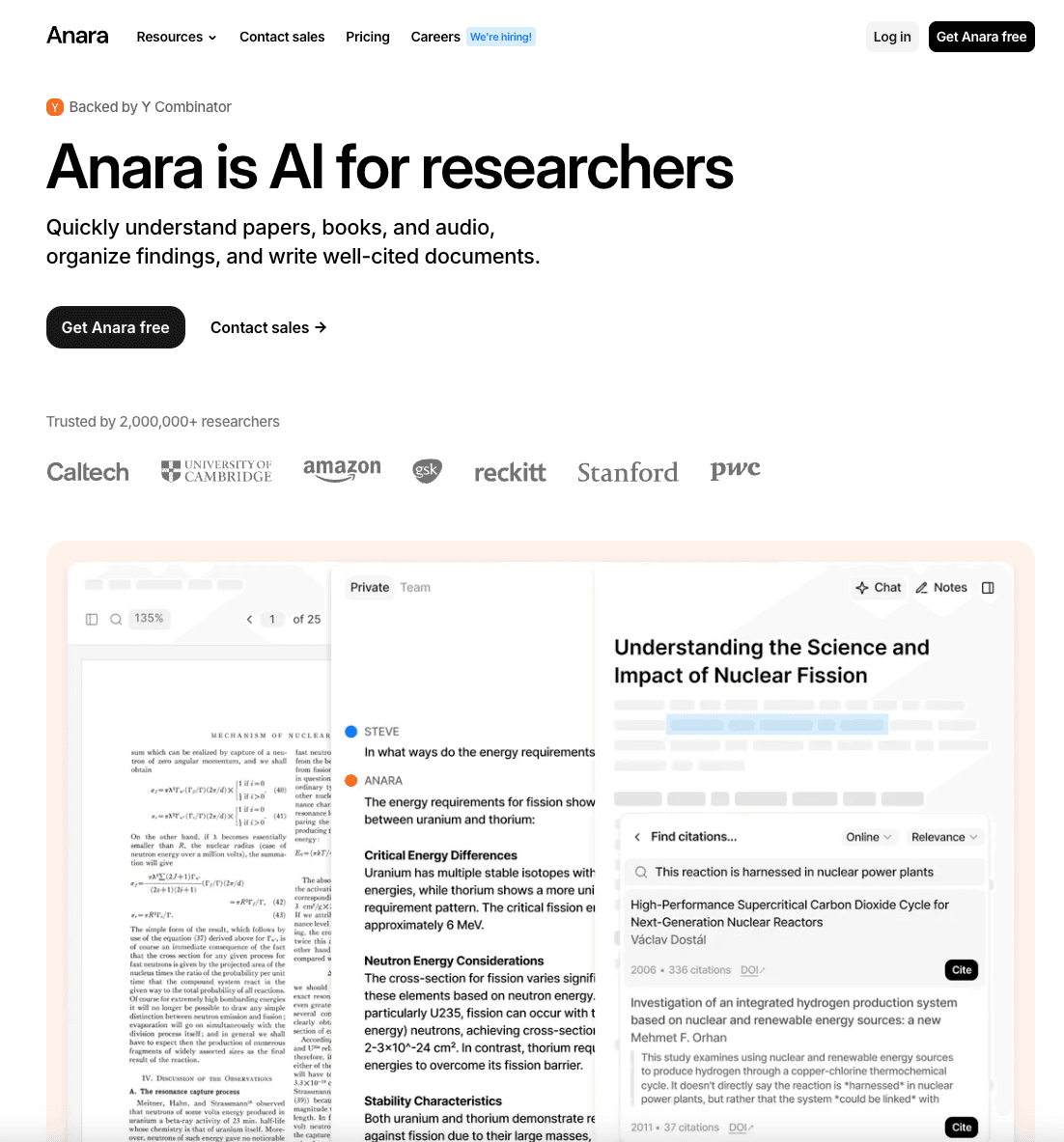
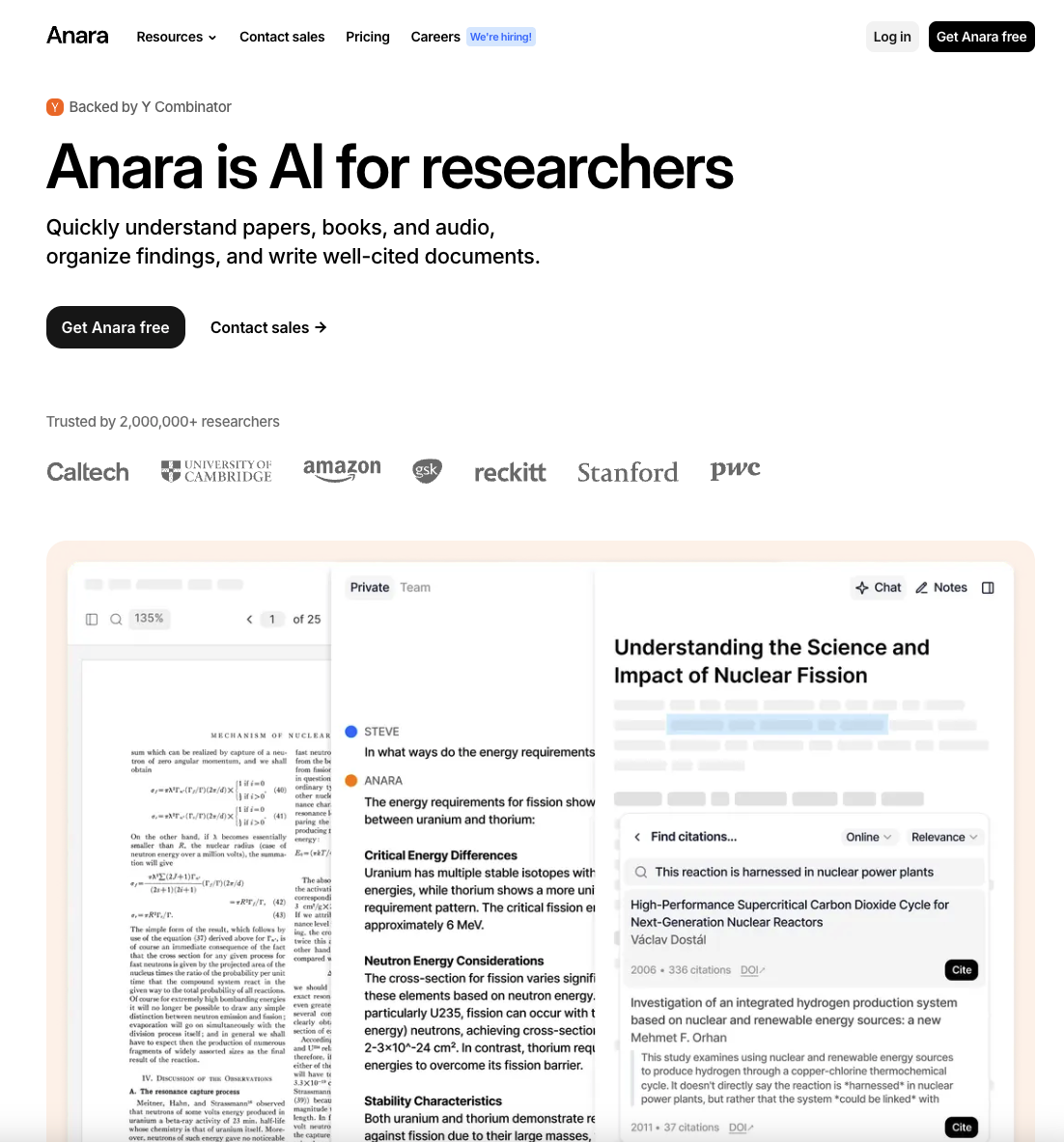
Anara is an AI research workspace for people who work with complex literature — PhD students, lab scientists, physicians, and data teams. Its core promise is not raw model power; it’s verifiability. Every AI answer is grounded in sources users upload (papers, books, images, audio/video) with transparent citations and source highlighting. That single choice solves the adoption blocker for research: trust.
This case is high-signal because the founder didn’t try to win with “more features” or a proprietary model. He won by choosing the right user (researchers), the right constraint (trust-first), and the right go-to-market (PLG + creator-driven reach). It’s a repeatable blueprint for solo builders: pick the highest-friction adoption barrier in a niche and make it your brand.
Why now? RAG and multi‑modal pipelines are commodity-fast to assemble. What isn’t commodity: designing for verifiability, building a reputation for rigor, and sequencing growth so product, content, and capital compound.
Why This Founder Had Edge
Naveed Janmohamed’s background in Human–Computer Interaction (HCI) shaped Anara’s core choice: design for verifiability, not novelty. That lens turned a generic “AI reader” into a research‑grade evidence surface.
- HCI over ML: Optimized for cognitive load, affordances, and ethical UX.
- Anti–dark-pattern ethos: Transparency by default (citations, highlights, provenance) builds trust capital.
- Constraint as strategy: A solo founder channeling limited bandwidth into one user, one promise, one surface.
 Naveed Janmohamed, Founder of Anara, image source.
What the Founder Did Differently
Not a story — a set of decisions:
- Niche over breadth: Rebranded from a general tool (Unriddle) to serve the heaviest users of complex literature: researchers. This increased willingness to pay and simplified product requirements.
- Trust as the product, not a feature: Every response is tied to sources. The UI is built around traceability, not vibes. The brand promise = “verifiable answers.”
- PLG with intentional constraints: Freemium caps force serious users to outgrow limits naturally (file sizes, models, collaboration), converting pull—not push.
- Guerrilla to viral: Early traction from Reddit/Product Hunt; scaled awareness via short‑form video and creator partnerships where the users actually spend time.
- Human‑computer interaction edge: HCI background framed the problem as cognitive load and ethical design (anti–dark-pattern thinking), leading to a clean, trust-forward UX.
- Leverage over headcount: Integrated best-in-class LLMs and managed infra instead of training a model or building undifferentiated plumbing.
The Growth Flywheel: Step-by-Step
The order mattered. Each step created an irreversible gain for the next.
| Stage | Strategic Intent | What Shipped | Irreversible Gain |
|---|---|---|---|
| MVP (Unriddle) | Prove “chat with docs” utility | Upload → query → summarize | Clear user “aha” moment |
| Community Launch | Validate pull, not push | Reddit + Product Hunt posts | Early paying users and feedback loops |
| Rebrand + Niche | Increase WTP and clarity | Focus on researchers + citations as UX | Brand-positioning moats |
| PLG Engine | Convert usage into revenue | Freemium caps; premium models; bigger files | Predictable self-serve upgrades |
| Viral Content | Non-obvious channel fit | Creator-driven short-form demos | Massive, low-CAC top-of-funnel |
| Team/Infra Maturity | Keep velocity with scale | Best-in-class LLMs; vector DB; AWS | Reliability and speed without headcount |
| Enterprise Extensions | Monetize trust at scale | SSO, HIPAA, admin controls | Institutional adoption pathways |
Strategic Leverage & Business Model
- Leverage sources:
- Focus: One user who values verifiability (researchers) → higher LTV and clearer roadmap.
- Workflow integration: Upload → understand → cite → collaborate in one surface → switching costs compound.
- Third‑party excellence: Use OpenAI/Anthropic/Google models and a vector DB; invest energy in UX and workflow, not model training.
- Brand as a moat: “Trust-first” positioning hardens with every cited answer and paper handled.
- What they didn’t do:
- Didn’t overbuild infra or train a model.
- Didn’t hire ahead of traction; used capital selectively to reinforce product and GTM.
- Didn’t chase every user segment; said no to breadth.
- How it makes money (simplified):
- Free: Generous try-before-buy; enforced via caps on messages/uploads/file sizes.
- Pro (individual): Unlocks higher limits, premium models, larger files, collaboration.
- Team/Enterprise: Admin, SSO, compliance (e.g., HIPAA), support.
- Why this scales solo:
- PLG handles acquisition; creators drive awareness; infra is managed; model improvements are outsourced; the founder focuses on UX changes that move revenue.
Pricing & Plan Ladder (indicative)
| Plan | Who It’s For | Core Unlocks | Typical Price Signal |
|---|---|---|---|
| Free | Light/casual research | Limited messages, uploads, file sizes | $0 (conversion wedge) |
| Pro (Individual) | PhD, clinician, scientist | Larger files, premium LLMs, collaboration | ~$12–$20/mo |
| Team | Labs, departments | Admin, shared repos, permissions | ~${18}/seat/mo |
| Enterprise | Institutions | SSO, HIPAA, priority support | Custom |
Can You Replicate This Today?
Short answer: yes — faster on tech, harder on judgment.
- Easier now:
- RAG stack: LlamaIndex/LangChain + managed vector DB + Claude/GPT/Gemini = days, not months.
- Multi-modal ingestion: Off‑the‑shelf OCR, ASR, and vision models; cloud storage is trivial to wire.
- Content engine: AI-assisted scripts, voice, and editing for short‑form demos; programmatic SEO for top‑of‑funnel.
- Still hard:
- Picking the right niche where “trust deficit” is the blocker (e.g., legal discovery, clinical trials, financial compliance).
- Designing for verifiability — citations, UI affordances, and failure transparency that researchers believe.
- Building a brand users talk about without you in the room.
- If starting today, do this instead of copying:
- Start in a vertical where verification risk is existential (legal/clinical/finance). Ship trust-first from day one.
- Make the MVP multi‑modal (PDF/image/audio/video) and citation‑centric. Don’t ship a chatbot; ship an “evidence surface.”
- Automate the baseline content; reserve founder time for authentic community engagement where users actually hang out.
- Engineer the paywall around real researcher breakpoints (file sizes, team handoff, premium models, export/citation formats).
A 14‑Day Solo Replication Blueprint (stack + sequencing)
- Day 1–2: Niche and Jobs-to-be-Done
- Pick a trust‑sensitive vertical (e.g., clinical evidence synthesis) and define 3 “can’t fail” tasks.
- Day 3–5: MVP Surface
- Next.js + Tailwind; upload → chunk → retrieve → answer with inline citations; use LlamaIndex/LangChain + a managed vector DB.
- Day 6–7: Verifiability UX
- Clickable source highlights, inline page anchors, failure states that show “no evidence found.”
- Day 8–9: PLG Guardrails
- Free tier caps that mirror real workflow breakpoints; Pro unlocks premium models and bigger files.
- Day 10–11: Distribution
- Reddit/Scholars groups + 3 creator demos (scripted, high-signal, 20–40s) across TikTok/IG/YouTube Shorts.
- Day 12–14: Proof & Iteration
- Instrumented funnels, cohort retention checks, and export/citation formats researchers need (RIS/BibTeX/Word).
Takeaways: How to Think Like This Founder
- Design to the blocker, not the capability: If trust prevents adoption, make trust the interface.
- Niche buys clarity: Pick the segment with painful stakes and budgets; depth beats breadth.
- Sequence for compounding: Validation → positioning → PLG caps → viral distribution → enterprise extensions.
- Outsource commodity, own the workflow: Pay for models/infra; invest in UI/IA that creates switching costs.
- Turn constraints into levers: Freemium limits that mirror real researcher workflows convert themselves.
- Build a brand that survives model parity: RAG is replicable; trusted outcomes are not.
Part of the 100 Days, 100 Solo Startups series.