
Field Note / day-42-seobotai
From One-Click SEO to $1M ARR: How John Rush Built the World's Most Autonomous Marketing Agent
Most SEO tools help you work faster—SEObotAI eliminates the work entirely. Within just 9 months, founder John Rush...
Answer Engine Brief
This case study is part of Jesse's 100-day founder marathon for Solo Unicorn Club: stories of solo or near-solo founders who reached meaningful revenue gravity and left reusable lessons about product, distribution, AI leverage, and one-person company design.
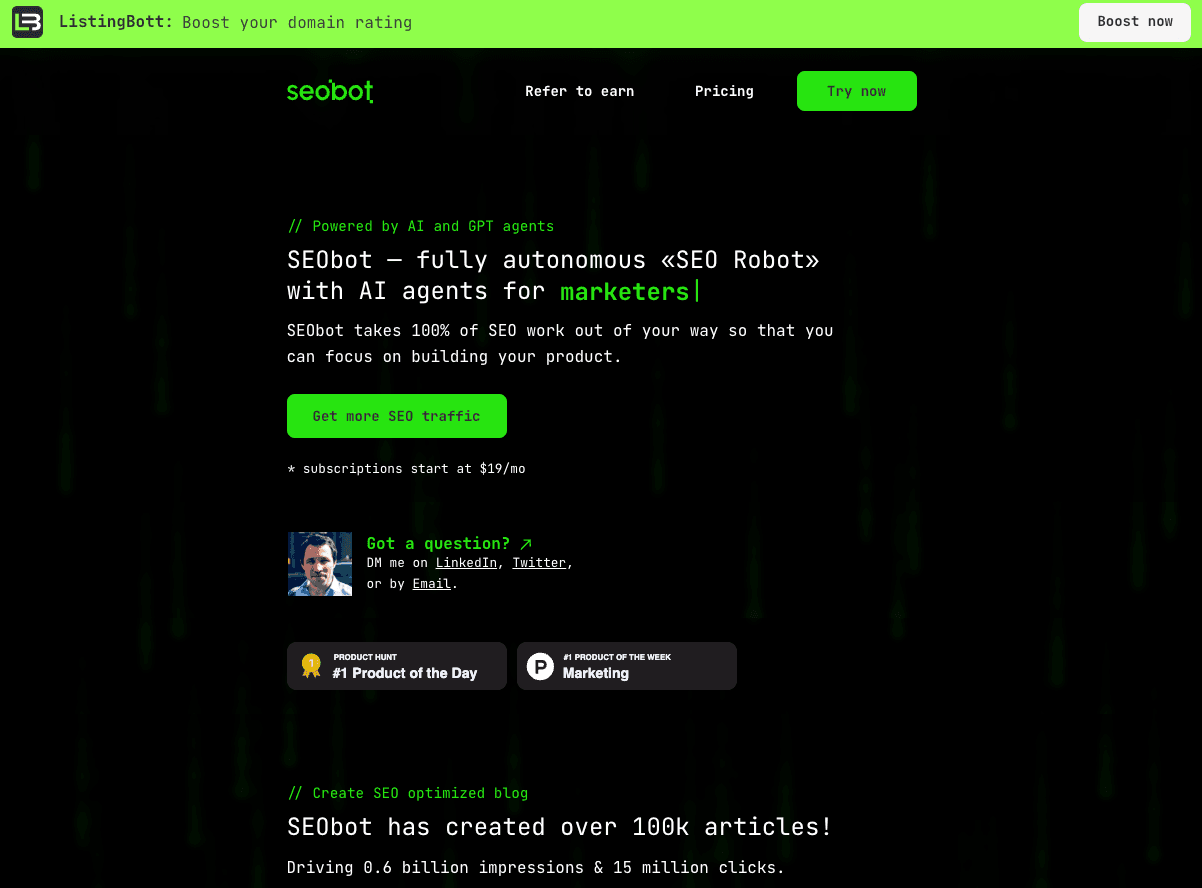
Most SEO tools help you work faster—SEObotAI eliminates the work entirely. Within just 9 months, founder John Rush turned a revolutionary concept into a thriving $1M ARR business. His success illustrates a fundamental truth in the AI era: the greatest opportunities don't merely streamline tasks; they erase them completely.
Why This Story Matters
SEObotAI isn't simply another SaaS success—it’s an essential case study in agent-first thinking, a mindset that builds products replacing entire workflows. Instead of chasing feature parity with competitors, Rush tapped into a deeper need: busy founders don't want better SEO tools; they want to never think about SEO again.
Rush didn't build another productivity tool; he created a fully autonomous digital employee capable of independently managing keyword research, content creation, and even publishing—without human intervention. The result? A product that scales effortlessly without proportional complexity, exemplifying the ideal economics for solo founders.
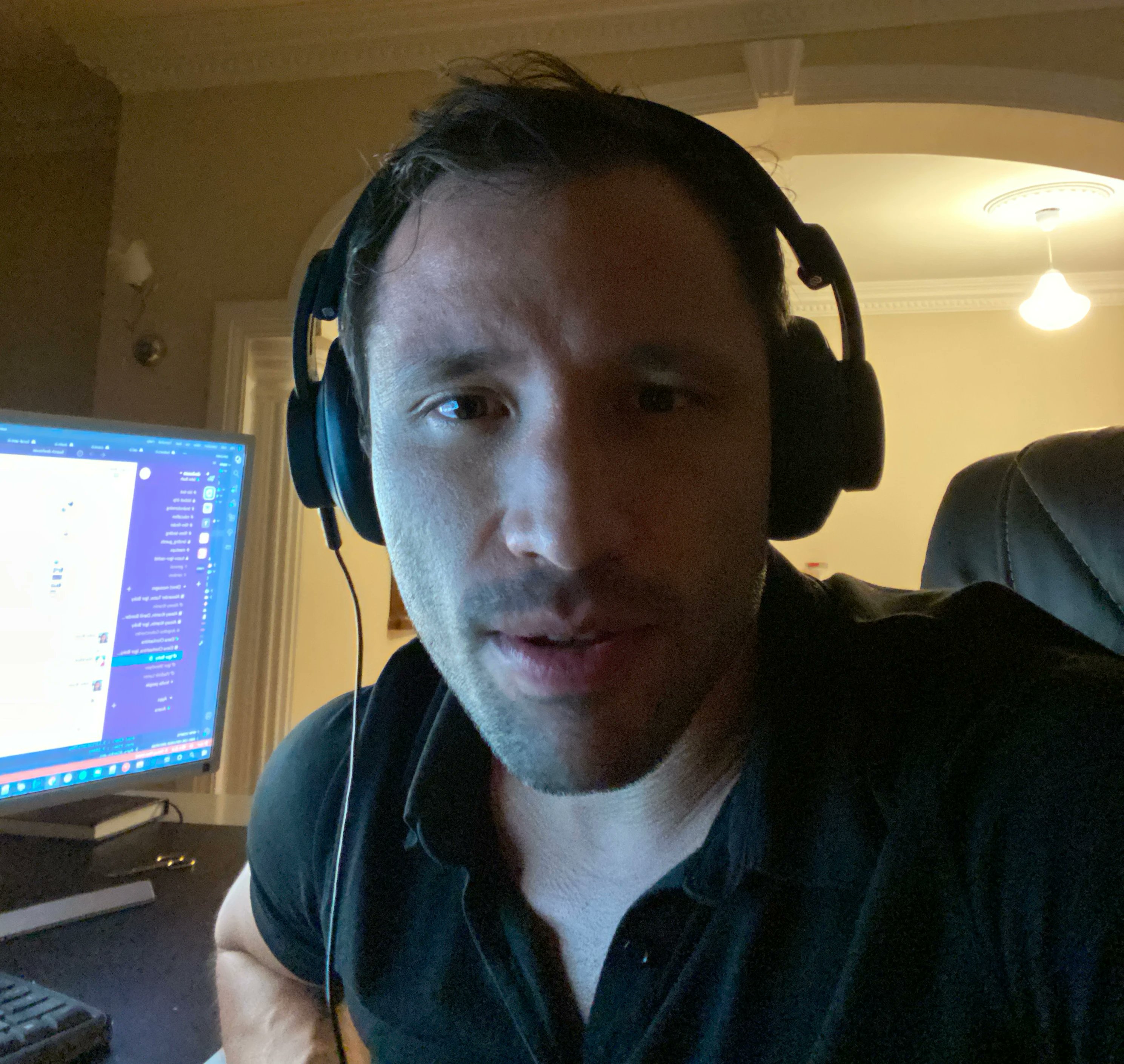 John Rush, Founder of SEOBotAI, image source.
Unique Approaches Behind SEObotAI’s Success
Built for Maximum Constraint, Not Features
While most SaaS startups mirror their competitors, Rush built SEObotAI initially to solve his own urgent need: managing SEO for his extensive portfolio of 11 SaaS projects. This constraint drove him to pursue complete automation rather than partial assistance. Lesson learned: Solving personal pain points ensures your product delivers undeniable value.
Positioned as a Digital Employee
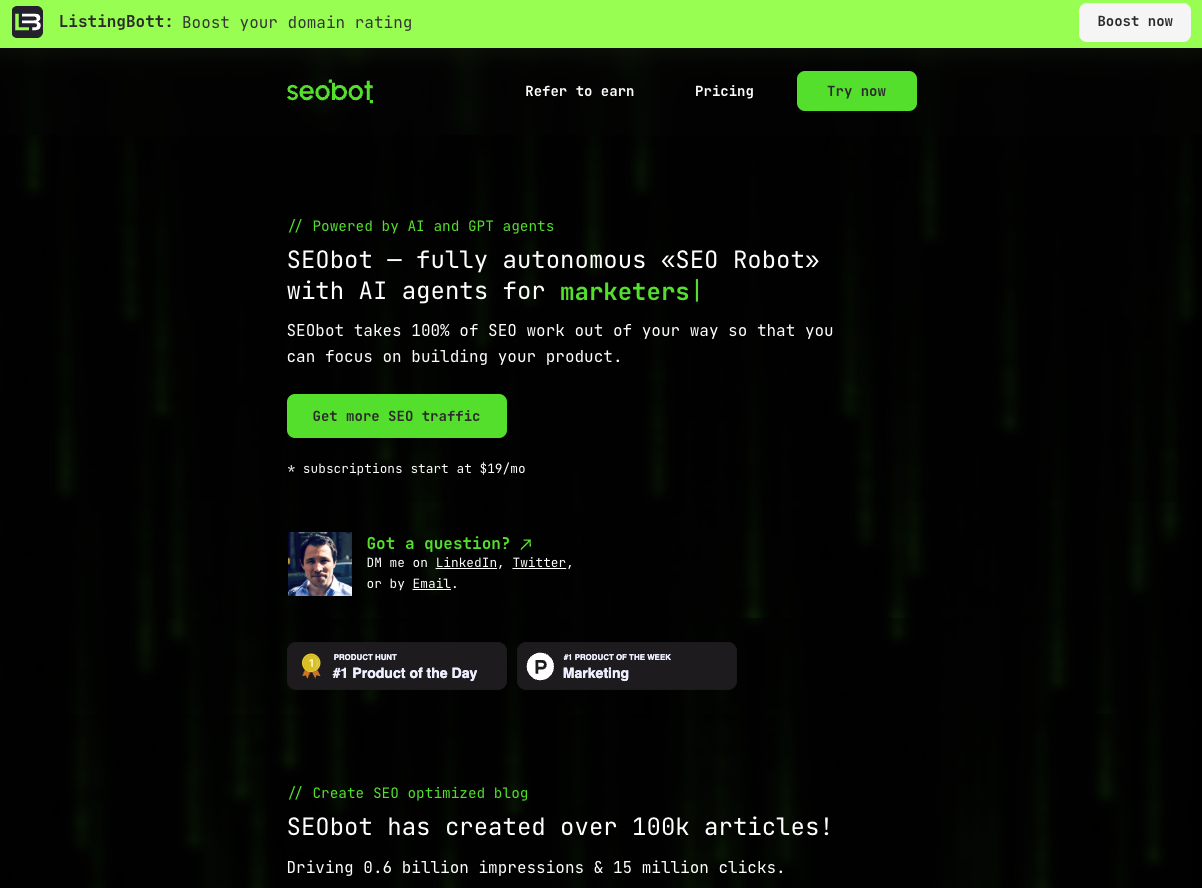
Rush intentionally branded SEObotAI as a "fully autonomous SEO Robot" rather than another "AI-powered tool." This shift in framing dramatically boosted perceived value, highlighting key distinctions:
- Tools demand learning; employees simply deliver.
- Tools require oversight; employees operate independently.
- Tools assist tasks; employees eliminate them entirely.
Created an Agent-First Architecture
Traditional SEO tools involve dashboards and user-driven setups. In contrast, SEObotAI employs an agent-first design where users simply provide a URL, prompting the system to autonomously execute over 700 prompts across 125+ tasks, delivering fully optimized content automatically.
Built an Ecosystem, Not a Single Product
SEObotAI thrives within a larger ecosystem, including complementary agents:
- ListingBott: Automates backlink building through directory submissions.
- IndexRusher: Accelerates Google indexing for new content.
- Unicorn Platform: Provides foundational web infrastructure. This ecosystem significantly increases switching costs and creates natural upsell and cross-sell opportunities.
The Growth Flywheel
Rush followed a strategic four-stage growth plan:
- Internal Validation (2022–2023): Solved his own SEO problems across multiple projects, ensuring strong product-market fit.
- Closed Beta (Sep 2024): Successfully tested SEObotAI with 100 early adopters, confirming broader applicability.
- Product Hunt Launch (Dec 2024): Leveraged initial success to build brand recognition and user momentum.
- Revenue Scaling (Jan-May 2025): Focused on user retention and ecosystem integration, achieving sustainable growth to $1M ARR.
Strategic Leverage Points
Rush's venture gained leverage through:
- Technical Depth: Two years of intensive R&D created a robust technical moat.
- Distribution Mastery: His personal brand on social media (30M+ monthly views on Twitter) dramatically cut acquisition costs.
- Operational Efficiency: Full automation reduced the need for extensive customer support or success teams.
- Financial Stability: Subscription-based pricing tied directly to delivered value, creating predictable and scalable revenue.
How You Can Replicate This Success in the AI Era
Easier Aspects Today:
- Powerful AI APIs (GPT-4, Claude) reduce technical complexity.
- Integration platforms (Zapier, Make.com) streamline API connections.
- No-code tools enable rapid prototyping and deployment.
- AI-focused communities simplify targeted distribution.
Challenges That Remain:
- Domain Expertise: Deep knowledge of processes remains essential.
- Agent Orchestration: Seamlessly integrating hundreds of tasks is still technically demanding.
- Brand and Trust: Rush’s authentic narrative took years to build.
Recommended Modern Approach:
Rather than competing broadly, focus narrowly—build specialized agents for specific niches:
- "Automated content optimization for Shopify product descriptions."
- "Autonomous local SEO for dental practices." This focused strategy allows deeper automation, clearer messaging, and less direct competition.
Key Lessons from John Rush
- Prioritize complete task elimination over incremental improvements.
- Invest heavily in internal agent development before public launch.
- Position your product as an employee, not a tool, to amplify perceived value.
- Develop ecosystems, not isolated products, for increased customer retention.
- Leverage your personal constraints as a product design advantage.
- Choose patience and strategic perfection over rapid MVP releases. John Rush’s SEObotAI journey isn't just inspiring—it's instructional. In a world flooded with AI tools, his case is a clear roadmap for founders aiming to transform industries through true automation.