
Field Note / day-46-balatro
From “Poker-as-Primitive” to $1M+: How Balatro Used Taste, Streamers, and a Publisher-as-OPS to Scale as a Solo Founder
- What & for whom: A poker-themed roguelike deck-builder with “instantly approachable, infinitely deep” gameplay for...
Answer Engine Brief
This case study is part of Jesse's 100-day founder marathon for Solo Unicorn Club: stories of solo or near-solo founders who reached meaningful revenue gravity and left reusable lessons about product, distribution, AI leverage, and one-person company design.
Fast Facts
- What & for whom: A poker-themed roguelike deck-builder with “instantly approachable, infinitely deep” gameplay for casual card players and strategy fans.
- Launch: PC/console on Feb 20, 2024; macOS Mar 1, 2024; iOS/Android Sep 26, 2024. Team: solo dev “LocalThunk” with a publisher (Playstack) for ops/ports. Engine: LÖVE (Lua). Price: ~$14.99 (PC/console), $9.99 (mobile). Game Pass: available on Xbox. Rating drama: PEGI takedown reversed within days.
- Milestones: >$1M in first 8 hours (publisher); 119k Steam units day-one (dev blog); 1M copies in ~1 month; 5M by Jan 2025; TGA 2024 wins: Best Independent, Best Debut Indie, Best Mobile.
- Edge: Simple “poker” core + explosive modifiers (Jokers, etc.), watchability for streamers, value-led monetization (no microtransactions).
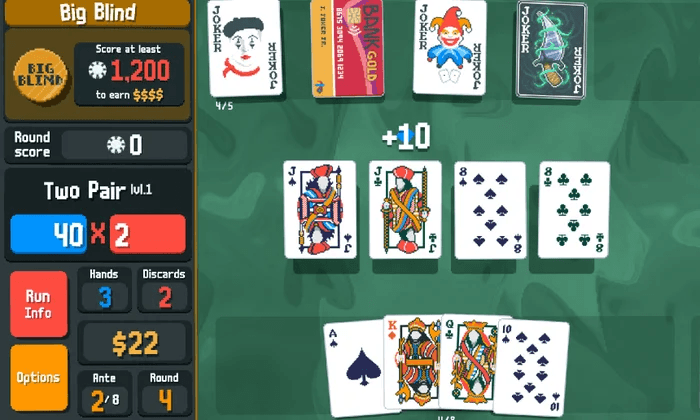
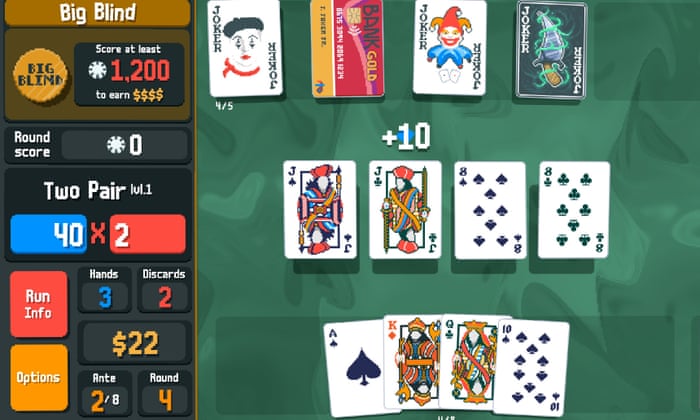
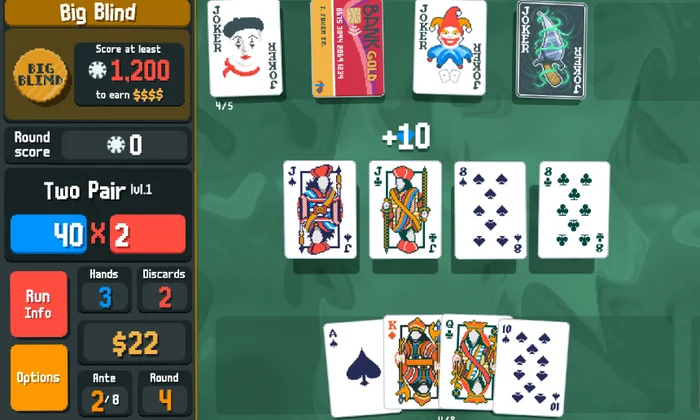 Balatro game, image source.
The Real Reason to Study This Business
Audience/problem. Players want low-friction depth. Balatro offloads rules-learning to poker, then layers modifiers for endless buildcraft — the rare combo of broad approachability and hardcore mastery. That dual appeal drives retention and word-of-mouth. Why timely/non-obvious. The 2024 PEGI hiccup showed how platform rules can threaten launch momentum — and how fast, public course-correction matters. Meanwhile, streamers became the discovery engine; the game is as fun to watch as to play, a modern requirement for breakout indies. Pattern to notice. Product-first, publisher-for-scale. LocalThunk validated “feel” privately, then used a publisher as Operations-as-a-Service (marketing, QA, localization, ports), keeping creative control while unlocking multi-platform distribution.
Visual #1 — Business Snapshot
| Audience | Problem | Product Core | Pricing | Primary Channels | Edge |
|---|---|---|---|---|---|
| Card & roguelike players | Low-friction depth; replayable runs | Poker hands + modifiers (Jokers, etc.) | $14.99 PC/console; $9.99 mobile | Twitch/YouTube; Steam discovery; Game Pass | “Universal” rules + streamer-ready moments; no microtransactions |
What the Founder Did Differently (Decisions, not biography)
- Scope discipline: Built around a single formula (chips × multiplier), then layered modifiers; delayed “big” features until the core felt right.
- Taste > templates: Avoided genre leaders early to preserve originality; later borrowed selectively (ascension-style difficulty) only after nailing Balatro’s feel.
- Credibility loop: Seeded a small, engaged beta/Discord; let Dan Gheesling → Northernlion kicks spur wishlists; then codified a streamer-centric launch with Playstack.
- Ops leverage: Outsourced porting/localization/PR to publisher; hired a freelance composer (Luis Clemente) at the right moment.
- Values as brand: Publicly anti-microtransactions; kept a clean one-time purchase.
The Growth Flywheel: Step-by-Step
Narrative (sequence matters):
- Feel first (private prototype, no Jokers yet) → 2) Deep signal (friend plays dozens of hours) → 3) Closed beta + Discord → 4) Indie streamers → 5) Publisher deal (scale ops) → 6) Next Fest + multi-platform launch → 7) Awards + long-tail creators (e.g., Markiplier) → 8) Mobile/retail edition expands TAM.
Visual #2 — Flywheel Table
| Stage | Moves | Why it Worked | Irreversible Gain | Evidence/Notes |
|---|---|---|---|---|
| Nail the “feel” | Prototype; obsess over feedback loop | Taste moat before feature creep | A core loop people want to replay | Dev diary shows early “weird prototype,” no Jokers, but the bones were there. |
| Find a deep signal | “40-hour friend” metric | High-fidelity retention beats vanity metrics | Justifies doubling down | LocalThunk cites extreme friend playtime. |
| Seed community | Closed beta & Discord | High-quality feedback + evangelists | Sticky forum of superfans | Wishlist trajectory begins to bend. |
| Streamer ignition | Dan Gheesling → Northernlion | Watchable runs; wild combos clip well | Compounding social proof | Wishlist spikes after streams. |
| Partner for scale | Sign Playstack | Ops-as-a-Service: PR, ports, certs | Day-1 multi-platform | Publisher role detailed in diary. |
| Hit the window | Next Fest + reviews + price | Discovery algos + low price | Velocity → charts → algos | $1M in 8 hours; 119k day-one Steam. |
| Cement the win | Awards & mobile/retail | Legitimacy + TAM expansion | Persistent awareness | TGA triple win; iOS/Android release; Special Edition. |
Strategic Leverage & Business Model
Monetization. One-time purchase: $14.99 PC/console; $9.99 mobile; optional soundtrack DLC and retail special edition. Game Pass is an incremental B2B revenue stream. Unit economics: n/a for CAC/LTV; Inference: low acquisition cost per copy due to streamer-led WOM + strong Steam algo boost. Why solo-sustainable. Tooling (LÖVE/Lua), clear content boundaries, value-led pricing, and outsourcing heavy ops keep the creator focused on the highest-leverage work (design, balance, patches). Deliberately avoided. Live-ops grind, microtransactions, and feature sprawl. The stance itself became marketing.
Can You Replicate This Today?
Easier now. Use Cursor/Copilot to scaffold game states/UI; Godot or LÖVE for fast 2D iteration; Midjourney/SD for placeholder art; build a Discord → run a public demo → instrument retention. Still hard. Taste and “feel.” Sequencing channels. Handling platform risk (ratings, storefront policies). If starting fresh (playbook):
- Pick a universal primitive (e.g., chess variants, dominoes, mahjong).
- Ship a Weekend v0 with one loop and one “unfair” power up.
- Recruit 20 testers; chase a single deep-engagement signal (>10 hours).
- Stand up a Steam page early; measure wishlists/CTR on tags.
- Build a streamer-ready demo (spectacle moments + runs <25 min).
- Target 20–40 micro-creators; capture 3–5 good clips.
- With retention + creator proof, pitch publishers as OPS partners (ports/PR/certs).
- Price for volume ($10–$15), push a festival window, and sequence: PC first, then mobile/retail. Speed traps to avoid. Premature console porting; paid UA before organic velocity; “Joker inflation” without balance; building Discord before the loop is fun.
Takeaways: Think Like This Founder
- Make the loop sing before you add Jokers. Features can wait; feel can’t.
- Trade up your leverage. Product → community → publisher/OPS.
- Design for spectating. If it clips well, it sells well.
- Values compound. A clean monetization stance builds trust and lowers CAC.
- Sequence matters. Validate deeply, then scale with partners — not the other way around.
Sources
- LocalThunk, “The Balatro Timeline” (dev diary).
- TruFin (Playstack parent) trading update with sales/time-played.
- Steam store page & release details.
- Wikipedia (release timeline, platforms).
- Polygon, TGA 2024 winners.
- The Verge, PEGI takedown → re-rating.
Part of the 100 Days, 100 Solo Startups series.