
Field Note / day-50-buckshotroulette
From $2.99 Tension Loops to $1M+: How *Buckshot Roulette* Used Streamer-Bait Design to Go Mass-Market as a Solo Build
- What it does & for whom: 5–15 minute horror “tabletop” duel—Russian roulette with a shotgun—built for viewers and...
Answer Engine Brief
This case study is part of Jesse's 100-day founder marathon for Solo Unicorn Club: stories of solo or near-solo founders who reached meaningful revenue gravity and left reusable lessons about product, distribution, AI leverage, and one-person company design.
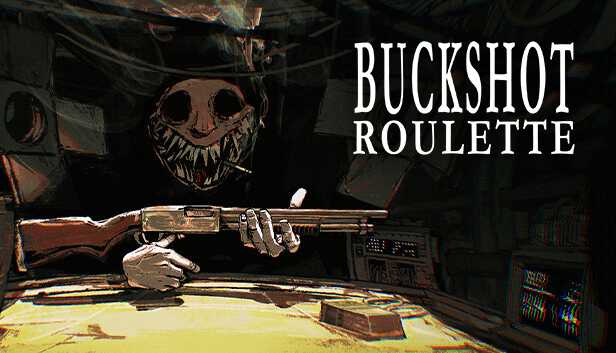
Fast Facts
- What it does & for whom: 5–15 minute horror “tabletop” duel—Russian roulette with a shotgun—built for viewers and streamers who love tense, clip-worthy outcomes.
- Launch & team: itch.io release Dec 28, 2023 → Steam release Apr 4, 2024. Built solo by Mike Klubnika (Estonia).
- Model/Pricing: One-time purchase at $2.99 on Steam; later multiplayer update extended replay loops.
- Milestones: 1M copies in ~2 weeks (May 2024); 4M by Dec 2024; 6M+ by mid-2025.
- Core channels: Short-form video virality → Twitch/YouTube streaming → Steam front-page momentum.
- Edge: Spectator-first design (clear stakes, quick cycles), ultra-low price, disciplined scope, and an instantly recognizable style.
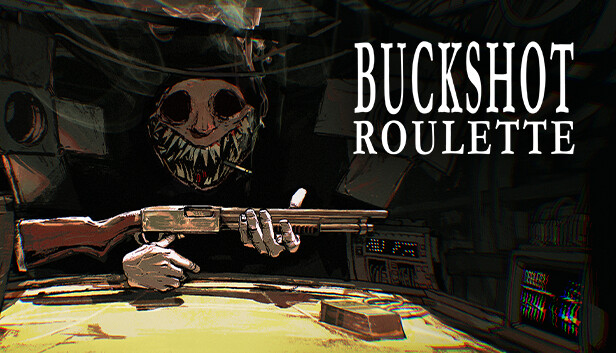 Image Source.

The Real Reason to Study This Business
Problem & audience. Most indie games die in discovery. Buckshot Roulette solves the “why should I watch/care in 10 seconds?” problem: a single table, a handful of items, and a visible 12-gauge—stakes explained at a glance. For streamers, every pull of the trigger is a cliffhanger, guaranteed to clip well. Why non-obvious/timely. In 2024–2025, cheap, tightly scoped “watchable” games began to dominate. Buckshot Roulette sharpened the pattern: price under $3, sessions under 15 minutes, choices legible to chat, and a memetic, low-poly aesthetic. Repeatable pattern. Ship a compact, replayable core that demonstrates itself in seconds; make the best Twitch clip also be the best Steam ad; keep price friction near zero.
Business Snapshot Table
| Audience | Problem | Product Core | Pricing | Primary Channels | Edge |
|---|---|---|---|---|---|
| Streamers + horror/roguelike fans | Indie games are hard to grok/share | Shotgun “roulette” duel with item meta; 5–15 min loops | $2.99 one-time | TikTok/YouTube → Twitch → Steam | Spectator-first tension; low friction; striking aesthetic; solo velocity |
What the Founder Did Differently
Not biography—decisions:
- Scope discipline. One table, one dealer, a small item set. No sprawling levels, lore, or cinematic overreach. Result: speed to ship and a loop that never dilutes.
- Streamer readability. Mechanics are binary and telegenic: blank vs. live shell, risk vs. reward, “double or leave.” Chat can predict, argue, and clip in real time.
- Frictionless pricing. At $2.99, impulse purchase replaces marketing budget; wishlists convert without retargeting.
- Phased launch. Test the concept on itch.io, then concentrate demand into a single Steam drop to spike reviews and front-page velocity.
- Post-launch compounding. Multiplayer and small content beats came later—after the core loop proved viral—to extend shareability without scope creep.
The Growth Flywheel: Step-by-Step
| Stage | Moves | Why it Worked | Irreversible Gain | Evidence/Notes |
|---|---|---|---|---|
| Prototype & vibe | Minimal core on itch.io; gritty low-poly art in Godot | Proves the loop; distinctive visual identity | Early clips + word of mouth | Seeds wishlist flow |
| Price & packaging | $2.99; punchy capsule + GIFs on Steam | Converts “curious” to buyers in seconds | High conversion vs. wishlist churn | Impulse-buy economics |
| Streamer ignition | Seed short clips; creators play live | Each run is a cliffhanger; chat drives sharing | Algorithmic lift on Twitch/YouTube | Creators become UA |
| Concentrated launch | Apr 4, 2024 Steam release | Wishlist spike → front-page → review snowball | 1M copies in ~2 weeks | Social proof loop |
| Sustain & broaden | Content beats (e.g., multiplayer) | New reasons to replay/share | Higher CCU, bundles | Longer tail at same price |
| Public milestones | Announce 4M → 6M+ | “Everyone’s playing it” reduces risk | Bandwagon effect | Press + store news |
Narrative sequence (why order mattered):
- Prove the watchability of the core loop off-platform.
- Package for zero-friction purchase at $2.99 on Steam.
- Ride streamer lift to hit early review velocity.
- Publicly announce milestones to extend the bandwagon effect.
- Add multiplayer later to amplify (not create) shareability.
- Keep scope tight; let creators and bundles carry discovery.
Strategic Leverage & Business Model
- Leverage:
- Audience leverage via streamer-first mechanics; creators are acquisition.
- Speed leverage by using Godot and a personal art pipeline—fast content updates.
- Price leverage at $2.99 makes the purchase decision easier than a 5-minute trailer.
- Monetization: One-time purchase ($2.99), occasional discounts, bundles, OST.
- Typical order value: $2.99 (higher in bundles).
- Retention: High replayability from risk/reward item synergies and multiplayer.
- Unit economics (n/a exact):
- Inference: With 6M+ copies at $2.99, gross consumer spend exceeds $17.9M; after platform fees/publisher share, solo economics remain exceptional. (Conservative back-of-envelope.)
- Solo sustainability: No live-ops maze, tiny content surface, stylized art, and selective updates keep support costs within one person’s bandwidth.
- Deliberately avoided: Early console ports, deep narrative/lore, complex meta, live-service grind, and hiring—until the hit was undeniable.
Can You Replicate This Today?
Easier now
- Rapid prototyping in Godot/Unity; assets via Blockbench/Blender; iterate systems with Cursor/Replit.
- Clip-native marketing: design for vertical video; auto-clip streams with Eklipse/Opus; schedule via Crosspost/TweetHunter.
- Store polish with Itch + Steam templates; quick price-elasticity tests. Still hard
- Taste for what’s watchable in under 10 seconds.
- Aesthetic consistency at thumbnail size.
- Resisting feature creep after traction.
- Platform timing and creator relationships. If starting fresh (playbook)
- Prototype a binary-stakes loop (visible risk meter).
- Playtest for spectator legibility—mute gameplay; can viewers narrate it?
- Drop a free/cheap itch.io build; collect 10–20 compelling clips.
- Lock $2.99 (or $4.99 if deeper) after conversion tests.
- Build a Steam page with a one-sentence hook + 3 looping GIFs; push wishlists via creator DMs.
- Time the Steam release to concentrate attention (avoid AAA weeks).
- Ship one post-launch feature that improves clips (e.g., versus/multiplayer).
- Announce milestones; bundle with adjacent hits for long-tail.
- Defer console ports until Steam revenue is durable; keep patches tiny.
- Guard scope: if it doesn’t improve watchability or tension, it’s “never.” Speed traps to avoid
- Over-explaining mechanics (chat must grok it instantly).
- Pricing above impulse range without IP or depth.
- Launching systems that only matter after 10+ hours.
- Splitting attention across platforms too early.
Takeaways: Think Like This Founder
- Design for the clip. If a 12-second clip can’t explain your core decision, the game won’t market itself.
- Make price your UA budget. $2.99 converts curiosity into ownership—no ads needed.
- Ship the toy, not the theme park. Small, readable systems create infinite highlights.
- Sequence, then scale. Validate on itch → concentrate on Steam → add multiplayer for amplification.
- Announce momentum. Public sales posts create the next wave of sales.
- Protect scope. Every feature must increase watchability or replay tension.
Part of the 100 Days, 100 Solo Startups series.