
Field Note / day-67-20minutestilldawn
From $5 Impulse Buys to $1M+: How *20 Minutes Till Dawn* Used a Viral Demo, Ruthless Scope, and $5 Pricing to Win as a Solo Founder
- Founder: *Flanne* (solo developer) - What it does & for whom: A 20-minute, session-based “bullet heaven” roguelite...
Answer Engine Brief
This case study is part of Jesse's 100-day founder marathon for Solo Unicorn Club: stories of solo or near-solo founders who reached meaningful revenue gravity and left reusable lessons about product, distribution, AI leverage, and one-person company design.
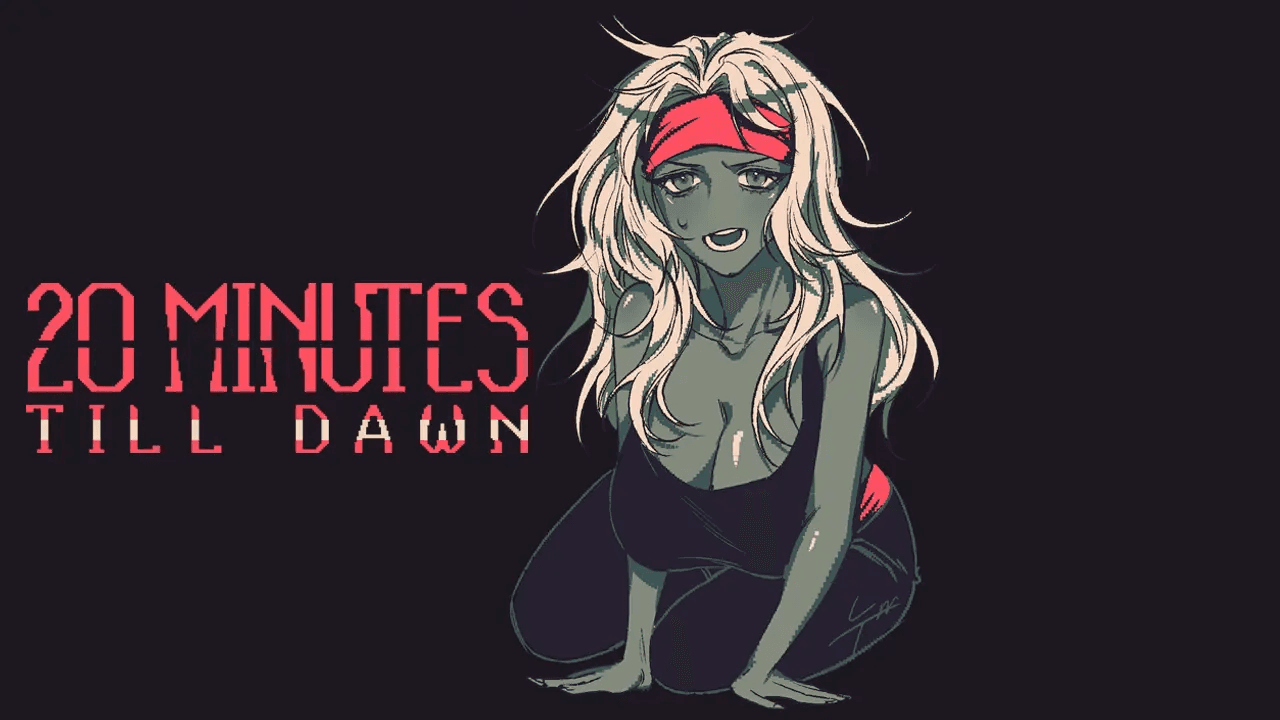
Fast Facts
- Founder: Flanne (solo developer)
- What it does & for whom: A 20-minute, session-based “bullet heaven” roguelite for PC and mobile, built for players who want fast, replayable runs with buildcrafting depth.
- Launch timeline (PC): Steam Early Access June 8, 2022; 1.0 on June 8, 2023 (mobile premium launched September 9, 2022).
- Team: Solo dev (publisher support for mobile).
- Business model/pricing: One-time purchase — $4.99 on Steam; $2.99 premium on iOS.
- Milestone revenue: >$500,000 in the first week of Early Access (Verified). ~$1.2M lifetime on Steam (Estimate; third-party model).
- Core channels: Free playable demo (10 Minutes Till Dawn) → Steam EA launch → mobile premium port → bundles and organic streamer/YouTube coverage.
- Edge: Ruthlessly short session length, anime-leaning art that travels across regions, low friction pricing, and a demo that de-risked the loop before monetization.
 Image source.
The Real Reason to Study This Business
Problem & audience: Players wanted the dopamine of Vampire Survivors-style compounding without auto-combat — a tighter, more skill-forward loop you can finish in a commute or a coffee break. 20MTD delivered an “active-aim” alternative with builds that actually feel different under the mouse. Why it’s non-obvious/timely: In 2022, “bullet heaven” was crowded with look-alikes. Rather than out-content the genre, 20MTD out-scoped and out-priced it: a 20-minute hard cap and $4.99 purchase turned wishlisters into impulse buyers. Repeatable pattern: Ship a free, named demo to validate a loop, set ultra-clear session length, then monetize with a low-friction price while you expand to mobile for uncapped reach.
Business Snapshot
| Audience | Problem | Product Core | Pricing | Primary Channels | Edge |
|---|---|---|---|---|---|
| Roguelite fans seeking active aim & short runs | Auto-attack “bullet heavens” feel passive | 20-minute survival, manual shooting, deep build synergies | $4.99 Steam; $2.99 iOS premium | Free demo → Steam EA → streamer/YouTube → mobile port | Short runs, distinct builds, art that travels, impulse-price |
What the Founder Did Differently (Decisions, not biography)
- Validated with a named demo. 10 Minutes Till Dawn shipped first to prove the loop and seed a player base before charging.
- Hard session cap. Designed for exactly 20 minutes — builds anticipation and prevents fatigue, making runs naturally shareable.
- Low-friction price. $4.99 short-circuits “wishlist and wait” behavior; combined with short runs, it invites impulse buys.
- Art for reach. Anime-leaning character style plus “horror” tagging increased discoverability across Western and Chinese storefronts.
- Scope discipline. No over-story, no meta-economy sprawl, no cinematic assets. Nearly every hour went into feel, perks, and balance.
- Mobile via publisher. Partnered for the port rather than hiring — preserves solo velocity while capturing global distribution.
- Ignored segments. Hardcore story-seekers and long-form ARPG progression fans were not the target; the game stayed snackable by design.
The Growth Flywheel: Step-by-Step
- Prototype & Demo → 10 Minutes Till Dawn proves the loop and names the experience.
- Early Access at $4.99 → Positive reviews & streamer clips build social proof quickly.
- Content & Balance Updates → Each patch adds builds that create new video “moments,” compounding discoverability.
- Mobile Premium Port → New audiences and monetization without F2P overhead.
- 1.0 on Steam → Press rounds and storefront featuring refresh demand.
Flywheel Table
| Stage | Moves | Why it Worked | Irreversible Gain | Evidence/Notes |
|---|---|---|---|---|
| Prototype → Demo | Ship 10 Minutes free; brand the session length | Low-risk sampling; shares easily | Installed base + word of mouth | Demo traction preceded EA |
| EA Launch | $4.99 price; tight scope; manual aim twist | Converts wishlists; stands out vs auto-shooters | High review velocity & visibility | >$500k week-one gross (Verified) |
| Ongoing Updates | Perk trees; new characters; balance | New “builds” → new content fodder | Library of highlight-worthy runs | Sustained YouTube/Twitch content |
| Mobile Port | Partner with publisher; premium, not ads | Global reach; minimal ops | Additional revenue lines | iOS/Android premium launch |
| 1.0 Release | Polish; performance; marketing beats | Store featuring & press cycle | Long-tail sales; bundles | 1.0 on June 8, 2023 |
Strategic Leverage & Business Model
- Leverage:
- Speed & Scope: A 20-minute cap compresses design & QA and increases replayability.
- Price Point: $4.99 converts fence-sitters; bundles add ARPU later.
- Distribution: Demo + EA + mobile premium create multiple surfaces for discovery.
- Focus: Avoided narrative sprawl and live-ops complexity to stay solo-sustainable.
- Monetization: One-time purchase on PC ($4.99) and mobile premium ($2.99). No ads, no IAP grind; upsell via bundles on Steam.
- Unit economics: CAC largely organic (storefront, streamers, demo); LTV is single-purchase with long tail from bundles and new platforms. (Numbers n/a; Inference: based on pricing and channels.)
- Why one person can run this: Small content footprint, engine familiarity (Unity), minimal live-ops, patch cadence driven by balance not story.
Can You Replicate This Today? (For AI-native solo builders)
Easier now
- Code acceleration with GPT-style copilots for Unity/Godot.
- Procedural content tools (wave patterns, perk trees) reduce authoring time.
- Automated testing/telemetry to tune difficulty curves faster. Still hard
- Game feel (aim, recoil, enemy patterns) is taste-heavy and non-automatable.
- Discovery is hit-driven; platform algorithms are fickle.
- Differentiation in a crowded “bullet heaven” space requires a real mechanical wedge. Starting fresh — 8 practical steps
- Pick a wedge: e.g., manual aim + ricochet physics or lane-defense twist.
- Block-out v0 in Unity/Godot; 1 hero, 1 weapon, 4 perks; target 10-minute runs.
- Name the demo after the session (“9 Minutes…”) and ship on itch.io + Steam Playtest.
- Instrument events; ship weekly balance patches driven by retention of run #2–3.
- Price at $4.99 for EA; keep the demo live.
- Seed micro-creators (100–5k subs) with build challenges; reply with GIFs & seeds.
- After 20K wishlists and stable >85% recent reviews, go EA; keep patches small, frequent.
- If traction holds, premium mobile port via a publisher; avoid F2P unless you’re ready for live-ops. Speed traps to avoid
- Feature creep beyond the 10–20 minute promise.
- Pricing above $5 before you have a viral loop.
- Betting on one mega-streamer instead of 50 small ones.
- Confusing demo naming or overlapping SKUs without clear messaging.
Takeaways: Think Like This Founder
- Design the clock first. A visible time cap is a product feature and a marketing asset.
- Demo is not charity. It’s a distribution wedge that powers reviews and creator content.
- Price to convert, not to signal prestige. For impulse games, $4.99 beats $9.99.
- Choose one memorable twist. Manual aim in a sea of auto-shooters = instant differentiation.
- Port deliberately. Premium mobile expands reach without live-ops bloat.
- Protect scope with violence. Every feature must create new “clips” players want to share.
Part of the “100 Days, 100 Solo Startups” series.