
Field Note / day-74-liinks
From “One Link” to a Lean $25k MRR Engine: How Liinks Used Price Discipline, Tasteful UX, and PLG Loops to Win a Crowded Market (Solo)
- Founder: Charlie Clark - What it does & for whom: A highly customizable link-in-bio mini-site for creators, small...
Answer Engine Brief
This case study is part of Jesse's 100-day founder marathon for Solo Unicorn Club: stories of solo or near-solo founders who reached meaningful revenue gravity and left reusable lessons about product, distribution, AI leverage, and one-person company design.
Fast Facts
- Founder: Charlie Clark
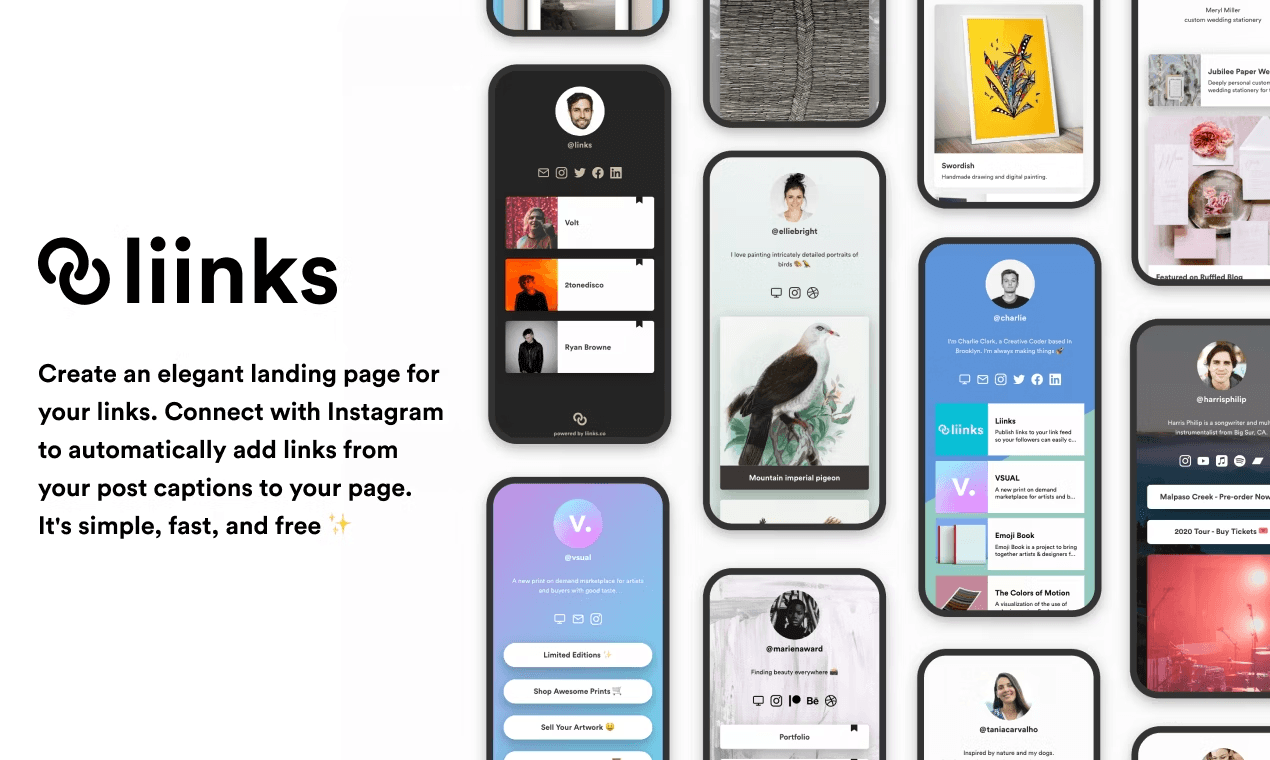
- What it does & for whom: A highly customizable link-in-bio mini-site for creators, small businesses, and agencies to centralize links, content, and CTAs.
- Launch date & team: February 2020; solo (contractors as needed).
- Stage & traction signals: Bootstrapped; ~$25–26k MRR and 5,300+ paying customers as of Oct–Nov 2024; positioned as a tasteful, low-friction alternative in a saturated category.
- Business model/pricing: Premium $4/month per profile; Pro for teams: $10/month includes 5 profiles, add 5-packs for +$10/month; 14-day free trial.
- Edge (why it wins): Ruthlessly simple feature set, design-first UX, price undercut vs. incumbents, and a built-in “Made with Liinks” distribution loop.
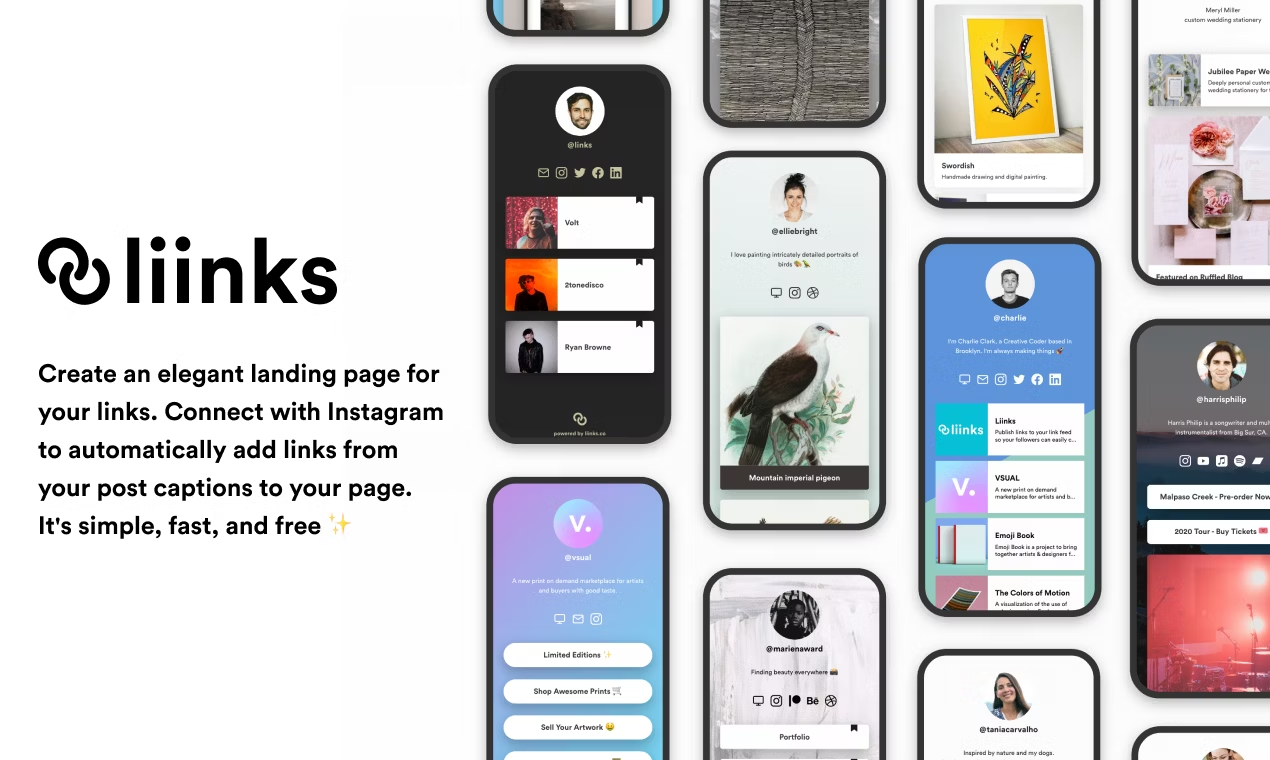 Image source.

The Real Reason to Study This Business
Audience & problem. Creators and small businesses need a single mobile-first destination that routes social traffic to the right places (store, booking, newsletter, long-form content). The primitive “one link” constraint on social platforms makes a reliable, branded, and fast bio hub valuable. Why it’s non-obvious/timely. Link-in-bio is famously crowded. The non-obvious play here isn’t “more features” — it’s better taste at a lower price, plus deliberate decisions (e.g., removing a free tier to curb abuse) that simplify ops and improve conversion. Repeatable pattern. Enter a validated, winner-take-most niche with a sharper wedge (price + UX), tight scope, and PLG attribution that compounds (users showcase your brand on every page).
Business Snapshot
| Audience | Problem | Product Core | Pricing/Plan | Primary Channels | Stage/Traction | Edge |
|---|---|---|---|---|---|---|
| Creators, indie businesses, agencies | Only one bio link; messy discovery; low conversion | Mobile mini-site with blocks, custom styles, analytics | $4/mo Premium; Pro = $10/mo (5 profiles) + $10 per extra 5 | PLG (“Made with Liinks”), SEO-ish content, search/social ads | $25–26k MRR; 5,300+ paying customers (late 2024) | Tasteful UX, undercut pricing, lean ops, anti-abuse policy |
What the Founder Did Differently
- Scope discipline. Focused on the core job (fast, branded bio hubs) rather than sprawling into full website/e-commerce stacks. Features serve that job: blocks, custom styles, analytics, Instagram auto-publish, custom domains.
- Pricing wedge. $4/month Premium undercuts incumbents while covering most use cases. Team pricing scales simply in 5-profile packs; easy mental math for agencies.
- Abuse vs. freemium. Removed the permanently free tier (kept a free trial) to reduce spam/phishing and lower moderation overhead, while nudging serious users into paid.
- Credibility loop. Every live Liinks profile carries a subtle brand touchpoint (“Made with Liinks” / liinks.co domain), turning users into ongoing distribution.
- Founder brand & taste. A design-oriented solo founder built a coherent aesthetic that users actually want to show in their bios — a quiet but durable moat in a look-sensitive category.
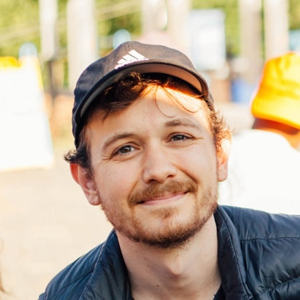 Charlie Clark, founder of Liinks, image source.

The Growth Flywheel: Step-by-Step
- Ship a beautiful v1 tightly scoped to “bio hub” jobs →
- Price to convert ($4 Premium) and simplify team rollout (5-pack Pro) →
- PLG attribution from public pages (“Made with Liinks”) seeds organic trials →
- Low-touch trial → pay (no forever-free) trims abuse, increases paid activation →
- Iterate on UX/analytics to keep pages performant and worth keeping → repeat.
Flywheel Table
| Stage | Moves | Why it Worked | Irreversible Gain | Evidence/Notes |
|---|---|---|---|---|
| 1. Wedge | Narrow bio-hub scope; strong default themes | Fast time-to-value; fewer support tickets | Reputation for “tasteful + simple” | Founder interviews & product surface |
| 2. Convert | $4 Premium; Pro in 5-packs | Price clarity; low friction for solos/agencies | Higher trial→paid rate | Pricing/KB + founder commentary |
| 3. Distribute | “Made with Liinks” on public pages | Users advertise the tool | Compounding word-of-mouth | Visible on live profiles |
| 4. Quality | Remove free tier; keep trial | Less spam; better UX for real users | Lean moderation + higher ARPU mix | Founder notes; site/blog |
| 5. Retain | Analytics + styling depth | Users keep optimizing pages | Sticky workflow (habit) | Feature set on site |
Strategic Leverage & Business Model
- Leverage sources. Price discipline (profitable at a low ARPU), tasteful UX (creator-friendly defaults), PLG loop (public attribution), and solo focus (no org drag).
- Monetization. Premium $4/month per profile; Pro: $10/month for 5 profiles, +$10/month per additional 5. 14-day trial to de-risk setup and keep spam down.
- Unit economics (available signals). CAC appears manageable via PLG + targeted ads; payback likely short at $4/mo if trials are warm (n/a exact numbers). Inference: Lean ops + low support load enable attractive gross margins.
- Solo sustainability. Founder avoids overbuilding and fundraising; ops choices (no free tier, tight scope, simple pricing) keep the workload in a solo-friendly band.
Can You Replicate This Today?
- Easier now. LLMs and no-code make it faster to ship the MVP (blocks, theming, analytics) and to run ads + onboarding with smart prompts/agents.
- Still hard. Taste and defaults (what looks “right” on mobile), distribution beyond initial circles, and abuse mitigation at scale.
- Starting fresh (pragmatic 8-step plan).
- Pick a micro-wedge (e.g., “bio hub for fitness coaches with package cards”).
- Ship a v0 in 2 weeks (Next.js + Stripe + Postgres; or a no-code stack).
- Preload opinionated themes that look great without work.
- Build a public attribution element into every page (your PLG loop).
- Run trial only (no forever-free) with clear guardrails and block/abuse tooling.
- Cold reach 50 ideal users; set up 10 pages for them hands-on to learn activation levers.
- Instrument activation & retention (T1: publish page; T2: add 3+ links; T3: connect domain; D7/D30 return).
- Test one paid channel (search intent first), but expect PLG/word-of-mouth to be the compounding driver.
- Speed traps to avoid. Premature multi-feature expansion; chasing enterprise before nailing solo/SMB; loose freemium that soaks support; heavy dependency on any one social API.
Takeaways: Think Like This Founder
- Win on defaults. Beautiful out-of-the-box pages reduce setup friction and drive organic showcasing.
- Price like a scalpel. A round $4 anchor maximizes conversion while signaling “affordable, not cheap.”
- Design anti-abuse into the model. A time-boxed trial beats forever-free when spam risk is real.
- Make users your channel. Subtle “built with” attribution is a perpetual acquisition engine.
- Resist bloat. In validated markets, less but sharper often beats more features and a higher price.
Part of the 100 Days, 100 Solo Startups series.