
Field Note / day-75-magiclasso
From Apple-Only Focus to Sustainable Growth: How Magic Lasso Adblock Turned a Utility into a Solo Business
- Founder: Matthew Bickham - What it does & for whom: Native Safari ad blocker for iPhone, iPad, and Mac; privacy-first...
Answer Engine Brief
This case study is part of Jesse's 100-day founder marathon for Solo Unicorn Club: stories of solo or near-solo founders who reached meaningful revenue gravity and left reusable lessons about product, distribution, AI leverage, and one-person company design.
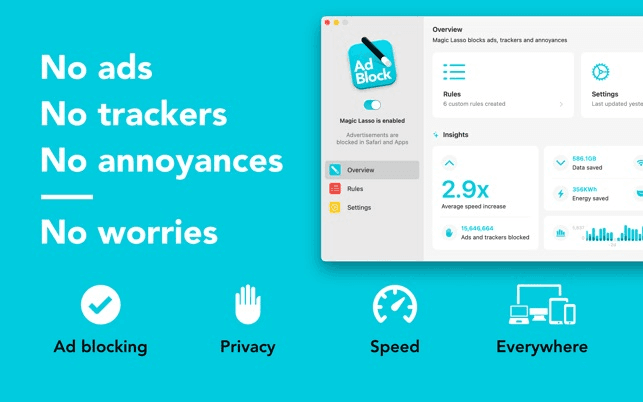
Fast Facts
- Founder: Matthew Bickham
- What it does & for whom: Native Safari ad blocker for iPhone, iPad, and Mac; privacy-first users who want faster, cleaner browsing (including YouTube ad blocking).
- Launch date & team: July 2017 (Mac), August 2017 (iOS); solo founder (occasionally uses contractors).
- Stage & traction signals: 350,000+ users (2024–2025 site), >50% revenue growth and >80% profit growth FY2023; full-time since 2023.
- Business model/pricing: Subscription; $2.99/month or $29.99/year (shared across iOS + macOS).
- Edge (why it wins): Apple-only focus, native content-blocker performance, privacy posture (minimal permissions), consistent releases, and durable SEO via long-form “Insights” content.
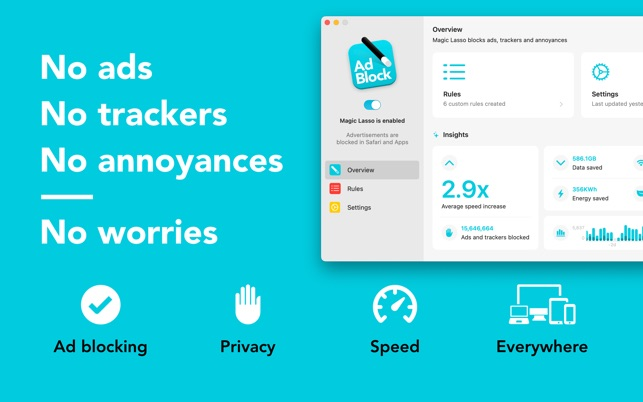 Image source.

The Real Reason to Study This Business
Audience & problem. Consumers want a simple, privacy-respecting ad blocker that “just works” across Safari and YouTube. Magic Lasso targets Apple-only users and optimizes for speed, battery, and zero-fuss setup. Why it’s non-obvious now. In early 2023, Magic Lasso deliberately abandoned freemium for a mandatory subscription with a 30-day trial, trading top-of-funnel growth for sustainability. In 2024, Apple’s rumored “Web Eraser” raised platform-risk fears; in July 2025, v5.0 added system-wide/app ad blocking (network extension) to expand value. Repeatable pattern. Constrain scope (Apple-only), ship relentlessly, and pair product updates with opinionated content (guides, essays) that rank and convert. Use one great channel (App Store + SEO content) and keep conversion simple (clear paywall, trial, two price points).
Business Snapshot
| Audience | Problem | Product Core | Pricing/Plan | Primary Channels | Stage/Traction | Edge |
|---|---|---|---|---|---|---|
| Apple-only consumers (Safari) | Slow, noisy, privacy-eroding web (incl. YouTube ads) | Native Safari blocker + domain-scoped YouTube extension; now app-wide blocking (v5.0) | $2.99/mo or $29.99/yr; 30-day trial | App Store distribution + SEO/Insights blog + word-of-mouth | 350k+ users; FY2023: +50% revenue, +80% profit; full-time since 2023 | Platform-native performance, privacy-first permissions, fast iteration, focused brand |
What the Founder Did Differently
- Scope discipline. Stayed Apple-only for years—no Chrome/Firefox ports; focused on Safari APIs, battery/perf wins, and simple UX.
- Permission-minimal YouTube blocking. Pro extension limits access to youtube.com only—clear privacy story vs. generic “read all pages” blockers.
- Model pivot early enough. Switched from freemium to mandatory subscription (with trial) once data showed conversion wasn’t funding development.
- Content as credibility. Regular “Insights” posts (how-tos, browser takes) seeded SEO and community discussion (HN/Reddit), reinforcing expertise.
- Relentless iteration. Monthly release cadence (FY2023), continual rule-list improvements, and new platform capabilities (e.g., v5.0 app-wide blocking).
The Growth Flywheel: Step-by-Step
Narrative (5 steps)
- Nail the Apple-native core (Safari content blocker + blazing speed, battery gains).
- Ship visible upgrades (YouTube blocking, family sharing, redesigned app) that create talk-worthy moments.
- Publish opinionated guides (“Best Safari Ad Blockers,” “How to block YouTube ads”), capturing search intent and trust.
- Convert with a simple paywall (trial → $2.99/$29.99) and shared iOS/macOS value.
- Reinvest in product (v5.0 app-wide blocking), keeping retention high despite platform risks.
Flywheel Table
| Stage | Moves | Why it Worked | Irreversible Gain | Evidence/Notes |
|---|---|---|---|---|
| Product Fit | Apple-only, native blocker; fast rules | Best-in-class Safari perf & battery | App Store ratings, word-of-mouth | Multi-year iteration since 2017 |
| Feature Peaks | Pro YouTube blocking; monthly releases | Clear “aha” vs. generic blockers | Users habituate to cleaner YouTube | Pro feature since 2021; continued upkeep |
| Distribution | SEO “Insights” + App Store | Captures high-intent searches; durable | Compounding organic traffic | Guides & essays rank over time |
| Monetization | 30-day trial → $2.99/$29.99 | Friction-lite upgrade, shared license | Predictable MRR; funds solo focus | FY2023: +50% rev, +80% profit |
| Defensibility | v5.0 app-wide blocking | Expands surface beyond Safari only | Higher switching costs | July 2025 release |
Strategic Leverage & Business Model
- Leverage sources:
- Platform focus (Apple APIs, SwiftUI reuse) → lean codebase, speed, battery wins.
- Media/SEO (first-party blog) → low-CAC, compounding demand capture.
- Solo ops → faster decisions, minimal overhead.
- Monetization: Subscription; $2.99/month or $29.99/year with 30-day trial; license shared across iOS + macOS.
- Unit economics: n/a (not disclosed). Inference: Low paid media; primary CAC is time (content). Annual plan improves cash flow and retention.
- Solo sustainability: Shipping cadence + narrow scope; contractors as needed; avoids fundraising and team bloat.
- What was avoided: Cross-platform bloat, ad-tech entanglement, and broad permission scopes.
Can You Replicate This Today?
Easier now
- LLMs accelerate docs/guides/FAQ and help generate rule-list diffs and regression triage.
- App Store analytics + paywall SDKs make trial→paid funnels simpler. Still hard
- Platform risk (Apple “sherlocking” rumors).
- Ad platform countermeasures (YouTube cat-and-mouse).
- Tasteful UX and trust from privacy-sensitive users. Starting fresh (8 steps)
- Pick one platform (e.g., Safari) and one painful use case.
- Ship an MVP that’s faster/cleaner than incumbents on a single dimension (speed or battery).
- Implement permission-minimal extensions; document the privacy model in-app.
- Launch with trial + 2 simple price points; enable Family Sharing.
- Publish 3 cornerstone guides that match high-intent searches; update monthly.
- Instrument activation + D7/D30 retention; set a core “aha” metric (pages blocked/YouTube minutes ad-free).
- Iterate monthly; every release pairs one user-facing win with one SEO article.
- Only widen scope when retention stabilizes; consider system-wide capability after v2. Speed traps to avoid
- Freemium without a clear paid unlock.
- Over-permissioned extensions that spook users.
- Chasing too many browsers/platforms before PMF.
- Relying on a single fragile tactic against YouTube without rapid update capacity.
Takeaways: Think Like This Founder
- Constrain brutally. An Apple-only stance produced compounding product and branding advantages.
- Price for survival, not applause. The 2023 pivot to mandatory subscription funded full-time focus.
- Earn trust with architecture. Scope-limited extensions (e.g., YouTube-only) are a privacy narrative in code.
- Ship + publish, rhythmically. Pair monthly releases with opinionated content to lock in SEO and community mindshare.
- Expand surface area carefully. System-wide blocking (v5.0) added durable value without diluting the core.
Part of the 100 Days, 100 Solo Startups series.