
Field Note / b-64
Paradox Deep Dive — Conversational AI for Recruiting
One out of every 10 job interviews in the U.S. is scheduled by Paradox's AI assistant Olivia. That's 32 million...
Paradox Deep Dive — Conversational AI for Recruiting
Opening
One out of every 10 job interviews in the U.S. is scheduled by Paradox's AI assistant Olivia. That's 32 million interviews per year, over 500 enterprise clients. Chipotle used it to speed up hiring by 75%. GM saves $2 million annually. Then in August 2025, Workday announced its acquisition of Paradox, closing the deal in October. This was the most significant transaction in HR Tech in 2025. I've been tracking Paradox while monitoring enterprise AI procurement trends, and this article breaks down its product, business model, and what the Workday acquisition means for the broader industry.
The Problem They Solve
Hiring for high-turnover roles is an extremely inefficient process.
A restaurant chain, retailer, or logistics company might need to hire 50,000 to 500,000 frontline workers per year. These roles share key characteristics: high candidate volume, high turnover (annual attrition can exceed 100%), standardized hiring processes — yet every step is labor-intensive.
What does the traditional workflow look like? Candidates apply on the website, HR manually screens resumes, someone calls to schedule an interview, the candidate no-shows or can't be reached, rescheduling happens, the interview takes place, an offer goes out. Average time from posting to onboarding: 23-45 days.
The core pain point is "friction in the middle steps." Research shows that 70% of candidates abandon their application if they don't hear back within 48 hours. For frontline roles, speed is everything.
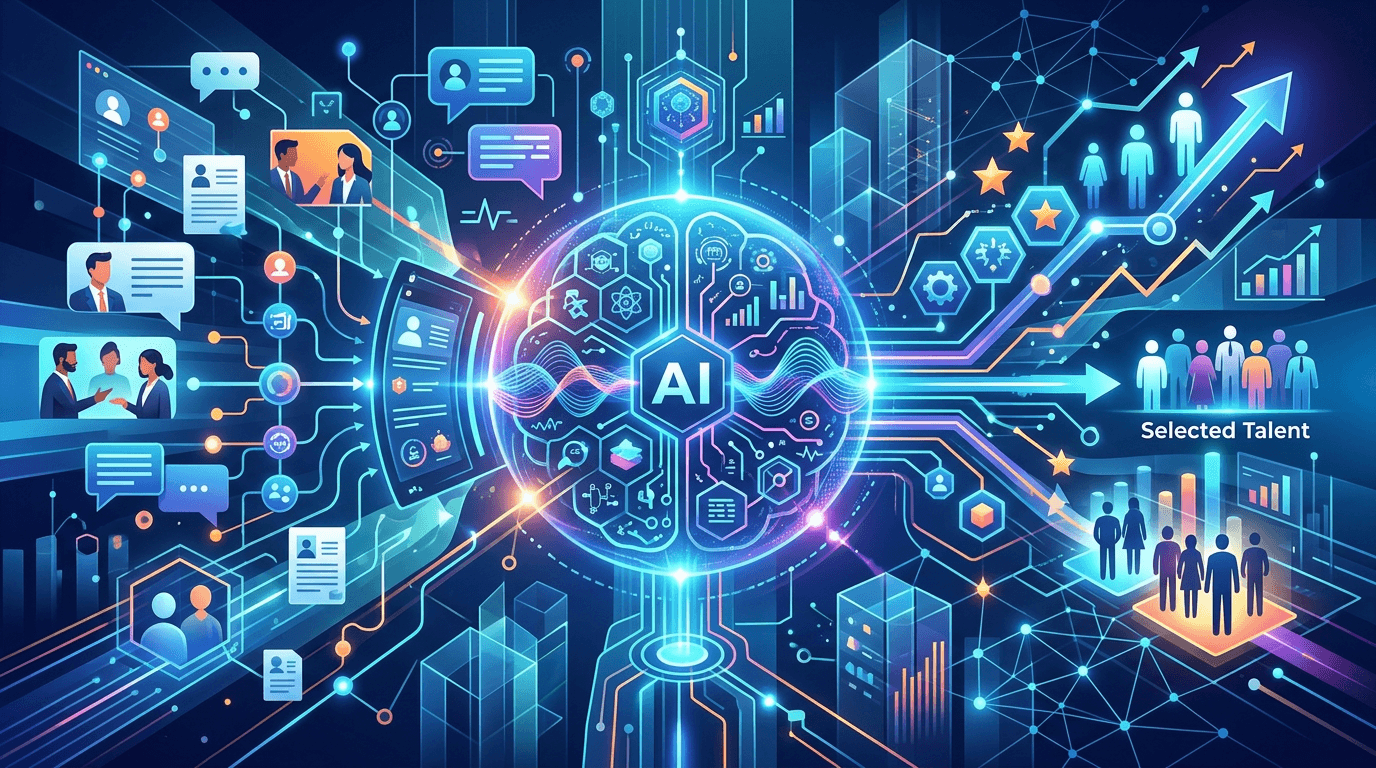
Paradox's solution is straightforward: use the AI conversational assistant Olivia to replace the repetitive HR tasks in the hiring process — screening, interview scheduling, FAQ responses, follow-ups — all via SMS, chat, and mobile, 24/7, in 100+ languages.
Product Matrix
Core Products
Olivia — AI Recruiting Assistant: All of Paradox's products are built around Olivia. Unlike traditional chatbots with rigid decision-tree Q&A, Olivia is an NLP-based conversational AI that understands natural language and handles multi-turn conversations. Her responsibilities include:
- Initial candidate qualification screening (auto-filtering based on minimum requirements)
- Automated interview scheduling (confirming times with candidates directly via text)
- Answering common candidate questions (salary range, work location, benefits, etc.)
- Interview reminders and follow-ups
- Multi-turn communication and status updates
Conversational Career Sites: Replaces traditional "search + fill-out-a-form" job pages with a conversational interface. Candidates learn about roles and submit applications by chatting with Olivia.
Automated Interview Scheduling: Integrates with hiring manager calendars. Olivia automatically finds mutually available times and confirms. Claims to automate 90% of the interview scheduling process.
Assessment Integration: Connects with third-party assessment tools, embedding candidate evaluations seamlessly into the conversational flow.
Technical Differentiation
Paradox's core differentiation isn't NLP technology itself (that barrier has dropped substantially in the LLM era) — it's the deep optimization for recruiting-specific scenarios. Several key points:
- SMS-native: Many frontline candidates don't check email but do read texts. Olivia's SMS capability is a killer feature.
- Speed: Average response time after a candidate sends a message is under 2 minutes (vs. 24-48 hours for human HR).
- Completion rate: Candidate conversion through Olivia exceeds 70%, far above the 10-20% typical of traditional online applications.
- Scale: A single Olivia instance can handle thousands of concurrent candidate conversations.
Business Model
Pricing Strategy
| Plan | Price | Target Customer |
|---|---|---|
| Basic | ~$1,000/month | SMBs |
| Mid-tier | $25,000-$50,000/year | Mid-size enterprises |
| Enterprise | $100,000+/year | Large enterprises / chains |
Custom pricing based on hiring volume and feature modules.
Revenue Model
Subscription SaaS. The core growth flywheel is "results-driven" — once clients use Olivia, the improvements in hiring speed and candidate experience are immediately visible, driving high renewal and expansion rates.
Funding and Acquisition
| Event | Date | Details |
|---|---|---|
| Total funding | — | $304M, 16 investors |
| Acquired by Workday | Aug 2025 signed / Oct 2025 closed | Estimated deal value $1.5-2B |
Key investors: Brighton Park Capital, Blue Cloud Ventures, Arizona Commerce Authority. Paradox was founded in 2016 and headquartered in Arizona.
Clients and Market
Marquee Clients
- Chipotle: 75% faster hiring. Olivia handles hourly worker recruiting across all U.S. locations
- General Motors: $2 million in annual recruiting cost savings
- 7-Eleven: 40,000 hours of recruiter time saved per week
- McDonald's: Global standardized restaurant recruiting
- CVS Health: High-volume hiring for pharmacy and retail roles
500+ enterprise clients, 32 million interviews scheduled per year.
Market Size
The global conversational AI market reached $14.8 billion in 2025, growing at a 21% CAGR. HR/recruiting is one of the highest-value verticals for conversational AI. Paradox holds a leading position in the recruiting conversational AI sub-segment.
Competitive Landscape
| Dimension | Paradox (Olivia) | Phenom Chatbot | XOR | Mya Systems |
|---|---|---|---|---|
| Core positioning | Conversational recruiting platform | Chat module within talent experience platform | Conversational recruiting | Conversational AI recruiting |
| Conversation depth | Deep multi-turn dialogue | Standard Q&A | Basic conversation | Multi-turn dialogue |
| SMS capability | Native SMS + two-way texting | Limited | Yes | Yes |
| Interview scheduling | Core feature, 90%+ automated | Yes | Yes | Yes |
| Scale | 500+ clients | 1,500+ clients | Smaller | Acquired |
| Key advantage | Speed + SMS + deep frontline optimization | Platform integration | Price | — |
With Paradox now under Workday, the competitive landscape has fundamentally shifted. The Paradox + Workday HCM combination means the world's largest HCM platform now owns the best conversational recruiting AI. That's enormous pressure on Phenom, iCIMS, and other competitors.
What I've Actually Seen
The good: Olivia genuinely excels in frontline hiring scenarios. I tracked data from a retail chain client: after deploying Olivia, the time from application to interview scheduling dropped from 72 hours to 4 hours, and interview attendance rates rose from 55% to 80%. For companies hiring tens of thousands per year, that efficiency gain translates directly into real dollars.
The complicated: Olivia's applicability for senior roles is limited. Engineers, executives, and creative professionals don't take well to interacting with a chatbot — they expect personalized, human communication. So Paradox's sweet spot is clear: high-volume, standardized, frontline-oriented roles. Additionally, post-Workday acquisition, whether non-Workday customers can continue using Paradox is an open question — if Workday turns Olivia into an ecosystem lock-in tool, many existing clients may be forced to migrate.
The reality: The technical barrier for conversational AI has dropped dramatically in the LLM era. Two years ago, Paradox's NLP capabilities were genuinely leading-edge in recruiting. Today, any competent development team can build a similar conversational bot using GPT-4 or Claude. Paradox's moat is scene-specific depth, customer base, and the Workday ecosystem — not pure technology. The $1.5-2 billion acquisition price bought customers, brand, and product integration opportunity.
My Take
Paradox is a textbook example of vertical AI done right: it picked the right scenario (frontline hiring), the right interaction mode (SMS/conversational), reached number one in the category, and then got acquired by the best possible buyer at the best possible time. But for companies that haven't adopted Paradox yet, the calculus needs to be re-evaluated — it's now part of Workday.
- ✅ Good fit for: Large enterprises with 5,000+ annual hires, primarily frontline/hourly roles, already on Workday HCM or planning to migrate to Workday
- ❌ Skip if: You don't use Workday (future compatibility is uncertain), or your hiring is mainly senior technical roles (Paradox wasn't built for that)
Bottom line: Paradox proved that in HR Tech, "doing one thing well" gets more market recognition than "doing many things" — a single AI recruiting assistant sold for $1.5-2 billion.
Discussion
After Workday's acquisition of Paradox, where do you see the path forward for independent HR Tech companies? Acquisition or staying independent? If you're a non-Workday customer, would you still choose Paradox?