
Field Note / day-25-tinypilotkvm
TinyPilot: From Hacker Post to $1M ARR
TinyPilot represents a masterclass in strategic market positioning for solo founders. In 2020, Michael Lynch identified...
Answer Engine Brief
This case study is part of Jesse's 100-day founder marathon for Solo Unicorn Club: stories of solo or near-solo founders who reached meaningful revenue gravity and left reusable lessons about product, distribution, AI leverage, and one-person company design.
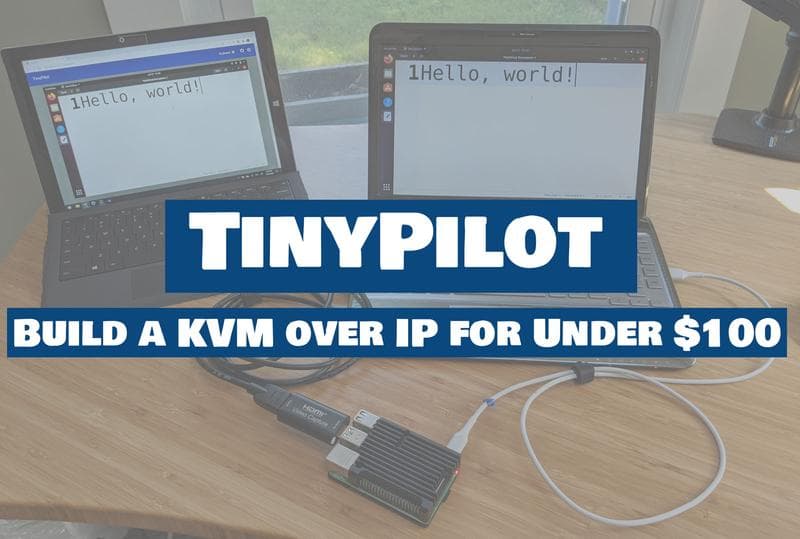
TinyPilot represents a masterclass in strategic market positioning for solo founders. In 2020, Michael Lynch identified a specific "value gap" in the KVM over IP market and built a $1M ARR business by positioning between expensive enterprise solutions and basic DIY options. Within four years, he sold the company for $600,000—but the real value lies in the repeatable strategic decisions that got him there.
This case study matters because Lynch didn't just build another hardware product. He demonstrated how a solo founder can use content marketing, open‑source leverage, and strategic pricing to capture market share from established enterprise players. In a $391M market growing at 6.3% annually, he carved out a profitable niche without venture capital, large teams, or complex technology.
The patterns here are immediately applicable to today's AI‑native solo founders: identify underserved market segments, use content as a primary acquisition channel, and leverage existing technologies to build defensible products faster and cheaper than incumbents.
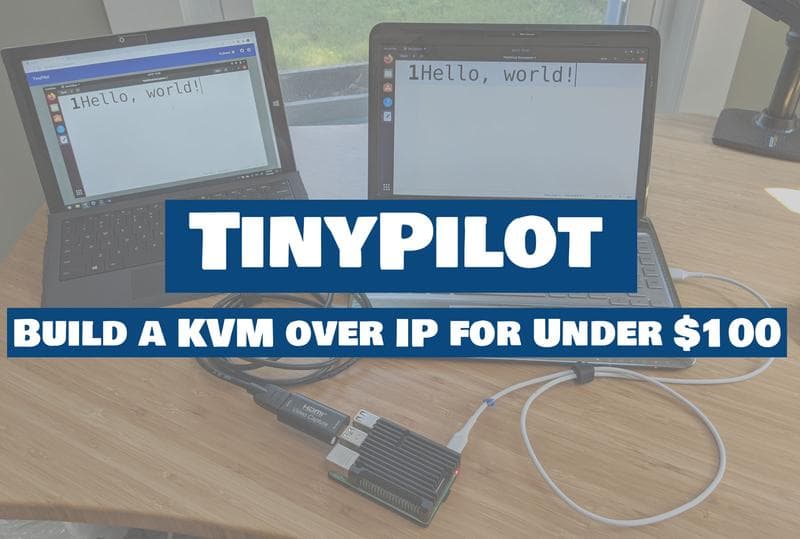 TinyPilot: Build a KVM Over IP for Under $100, image source
Origin Story: A Pandemic‑Era Market Vacuum
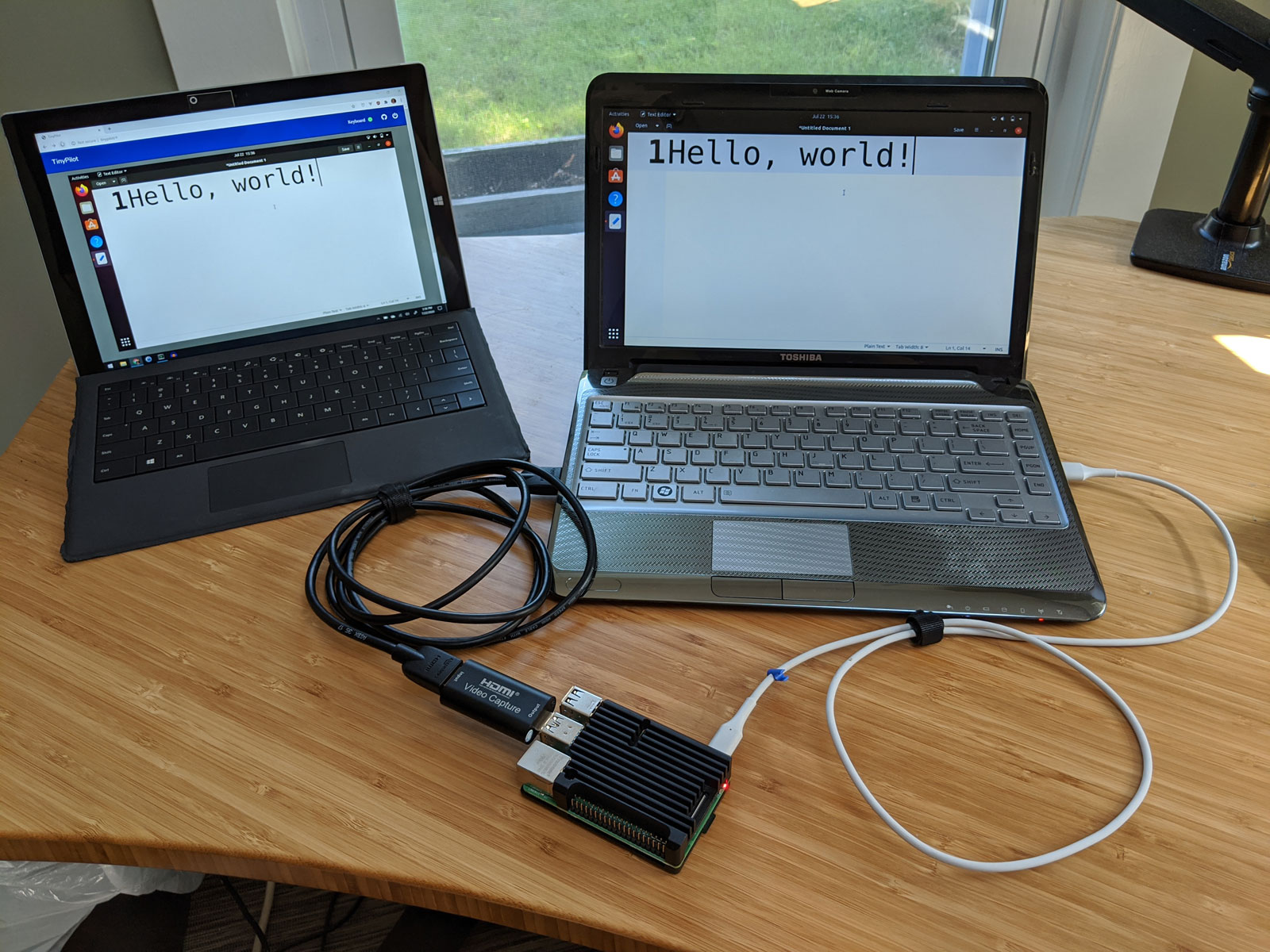
When COVID‑19 lockdowns hit in early 2020, on‑site server rooms around the world were suddenly off‑limits. System administrators still needed reliable “remote hands,” yet existing KVM‑over‑IP solutions were either US$15,000 enterprise appliances or fragile DIY hacks. The gap between cost and reliability had never been wider. Enter Michael Lynch—a self‑described tinkerer who loved solving his own pain points. In April 2020 he published a candid, step‑by‑step blog post titled “Build a KVM Over IP for Under $100.” The article wasn’t a sales pitch; it was a transparent journal of how a hobbyist could cobble together a Raspberry Pi, uStreamer, and some shell scripts to regain remote control of a headless machine. The honesty resonated. The post hit the front page of Hacker News, drew 48,000 readers in two days, and flooded Lynch’s inbox with one question: “Can you just build this for me?” Demand created the company, not the other way around. By the time he listed a pre‑assembled kit—what became TinyPilot—he collected US$9,000 in pre‑orders within the first week, instantly validating the market before he spent a dollar on inventory. That pandemic‑era spark explains much of TinyPilot’s early momentum and underscores a timeless lesson: solving an urgent, widely‑felt problem—then teaching the solution in public—is often the fastest way to create both an audience and a business.
What the Founder Did Differently
 Michael Lynch, X.com @deliberatecoder
Lynch approached the KVM market with three non-obvious strategic choices that most hardware founders miss: He competed on positioning, not features. Instead of trying to build the most advanced KVM device, Lynch identified that IT professionals and homelab enthusiasts wanted something between $15,000 enterprise solutions and $100 DIY kits. TinyPilot's $400-$735 price point wasn't arbitrary—it was strategically positioned to capture budget-conscious professionals who needed reliability but couldn't justify enterprise pricing.
He used constraints as competitive advantages. Limited capital forced Lynch to:
- Build on open-source foundations (Raspberry Pi, uStreamer) rather than custom hardware
- Use content marketing instead of paid advertising
- Leverage community feedback for product development
- Focus on a specific niche rather than trying to serve everyone He monetized the content creation process itself. Lynch's initial blog post "Build a KVM Over IP for Under $100" wasn't just marketing—it was product validation, customer education, and direct sales rolled into one. The post generated $9,000 in pre-orders within the first week, proving demand before scaling production. Key early decisions that created leverage:
- Open-source foundation: Reduced development time and costs while building community trust
- DIY-to-commercial bridge: Started as a DIY guide, then offered pre-packaged kits for convenience
- Content-first approach: Built audience before building inventory
- Recurring revenue model: Added annual software renewals ($99.99) to create predictable income
The Growth Flywheel: Step-by-Step
Lynch's growth strategy followed a specific sequence that compounded over time:
| Stage | Timeline | Strategic Intent | Irreversible Gain |
|---|---|---|---|
| Content Creation | July 2020 | Viral blog post on Hacker News | 48,000 readers, demand validation |
| Product-Market Fit | July-Dec 2020 | Pre-packaged kits for DIY audience | $9,000 first week, proven concept |
| Community Building | 2021 | Regular software updates, transparent development | Brand loyalty, word-of-mouth growth |
| Revenue Optimization | 2022-2023 | Annual software renewals, enterprise features | Recurring revenue, higher margins |
| Scale & Exit | 2024 | Team of 7, $1M ARR, strategic sale | Successful exit, proven model |
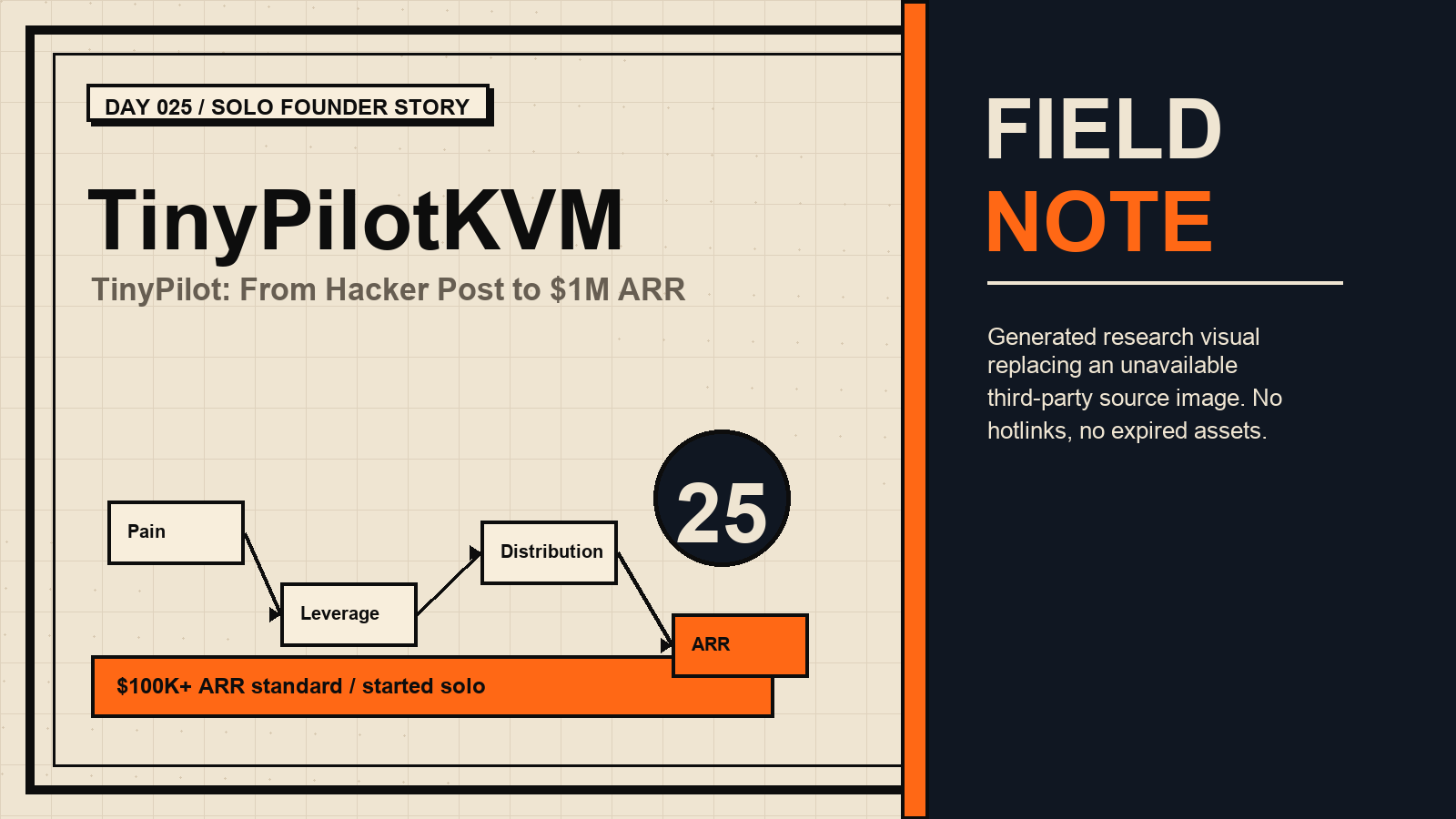 TinyPilot's rapid growth from viral blog post to $1M ARR in under 4 years
The sequence mattered because each stage built on the previous one. Content created audience, audience validated product, product generated revenue, revenue funded improvements, improvements strengthened positioning. Lynch couldn't have skipped steps—the viral content was only possible because he solved his own problem authentically.
TinyPilot's rapid growth from viral blog post to $1M ARR in under 4 years
The sequence mattered because each stage built on the previous one. Content created audience, audience validated product, product generated revenue, revenue funded improvements, improvements strengthened positioning. Lynch couldn't have skipped steps—the viral content was only possible because he solved his own problem authentically.
Strategic Leverage & Business Model
Lynch built leverage through three key mechanisms: Content as a strategic asset. His ability to consistently hit the Hacker News front page wasn't luck—it was a systematic approach to creating technically detailed, transparent content for a developer audience. This replaced expensive customer acquisition with organic reach. Open-source ecosystem leverage. By building on Raspberry Pi and contributing to projects like uStreamer, Lynch accessed a broader technical community while reducing development costs. He even funded uStreamer development directly, turning a dependency into a competitive advantage. Hybrid business model optimization. TinyPilot combined one-time hardware sales with recurring software revenues:
- Hardware: $400-$735 initial purchase
- Software: $99.99 annual renewals
- Support: Priority email support for renewal customers
- Accessories: VGA adapters, refurbished units This model sustainable for a solo founder because the hardware provided the initial customer acquisition, while software renewals created predictable revenue to fund ongoing development.
Can You Replicate This Today?
A solo founder could absolutely rebuild TinyPilot faster in 2024, but some elements would be easier while others remain challenging: Easier with AI and automation:
- Content creation: AI could help generate technical blog posts, documentation, and social media content at scale
- Customer support: AI chatbots could handle common inquiries, reducing support load
- Software development: Code generation tools could accelerate web interface development and testing
- Market research: AI could analyze competitor pricing and identify market gaps more systematically Still requires human expertise:
- Hardware integration: Optimizing Raspberry Pi performance and video streaming still requires deep technical knowledge
- Community building: Authentic relationships with the technical community can't be automated
- Strategic positioning: Identifying market gaps requires human intuition and market empathy
- Supply chain management: Physical product logistics remain complex and hands-on What you'd do differently today:
- Start with AI-powered content creation from day one to publish more frequently
- Use no-code tools for e-commerce setup and inventory management
- Implement AI customer support immediately to reduce operational overhead
- Focus even more heavily on software/SaaS components to reduce hardware complexity The fundamental strategy—identify market gaps, build in public, leverage existing technologies—remains highly relevant for AI-native founders.
Takeaways: How to Think Like This Founder
- Find value gaps, not feature gaps. Lynch didn't build the most advanced KVM—he built the most appropriately positioned one. Look for markets where enterprise solutions are overpriced and DIY options are too complex.
- Use content as your primary go-to-market strategy. Technical audiences respond to authentic, detailed content that solves real problems. Build your audience before building your product.
- Turn constraints into competitive advantages. Limited resources forced Lynch to make strategic choices that became strengths: open-source foundations, community focus, content marketing over paid ads.
- Build recurring revenue into hardware businesses. Pure hardware businesses are difficult to scale solo. Lynch's software renewal model created predictable revenue to fund development and support.
- Solve your own problem authentically. Lynch's personal frustration with expensive KVM solutions became his competitive advantage. He understood the customer because he was the customer.
- Strategic exits are about timing, not just valuation. Lynch sold at 2.4x earnings not because he couldn't grow further, but because the operational complexity of a hardware business conflicted with his personal goals.
Part of the 100 Days, 100 Solo-Startup Breakdown series.