
Field Note / c-01
Three Agent Architectures Every AI Builder Should Know
I've built over a dozen Agent systems, and the most expensive mistake I ever made wasn't choosing the wrong model or...
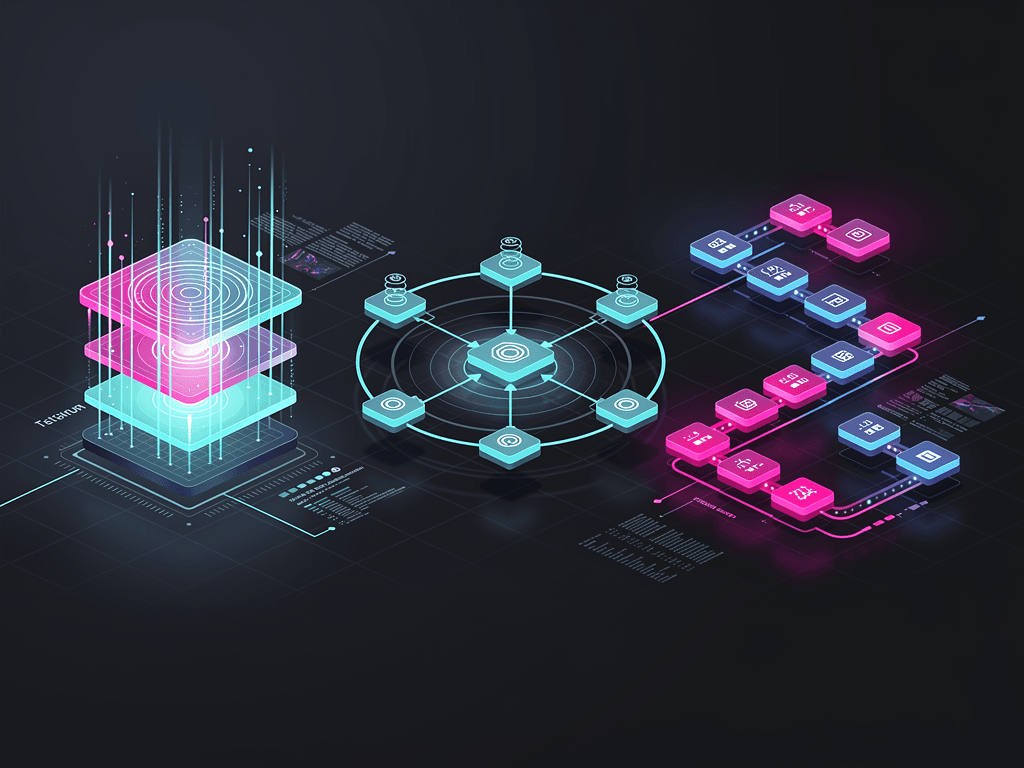
Three Agent Architectures Every AI Builder Should Know
Opening
I've built over a dozen Agent systems, and the most expensive mistake I ever made wasn't choosing the wrong model or writing bad prompts — it was choosing the wrong architecture. I initially ran a content moderation system using a Sequential Pipeline, which had 12-second latency. Switching to a Parallel Swarm brought it down to 3.8 seconds with no change in cost. Architecture choices determine 80% of your ceiling. This article breaks down the design logic, ideal use cases, and hard-won lessons from three core Agent architectures — so you can make the right call before writing a single line of code.
The Problem
Most people build Agent systems like this: get a demo working, then keep stacking features until the system becomes an unmaintainable pile of spaghetti. The root cause is not thinking through the architecture at step one.
Agent architecture isn't an academic concept. It directly affects three critical metrics:
- Latency: The difference between a few seconds and dozens of seconds is night and day for user experience
- Cost: Token consumption can vary by 3-5x
- Reliability: Whether a single point of failure brings down the entire system
The mainstream Agent frameworks of 2026 — LangGraph, CrewAI, OpenAI Agents SDK, AutoGen — all use some variant of these three architectures under the hood. Understanding the principles matters far more than memorizing framework APIs.
Core Architectures
Architecture 1: Sequential Pipeline
The most intuitive architecture. Agent A's output feeds into Agent B, Agent B's output feeds into Agent C — a linear flow.
Input → Agent A → Agent B → Agent C → Output
Design principle: Each Agent does one thing. Upstream output becomes downstream input. Data flows in one direction.
from openai import OpenAI

client = OpenAI()

def sequential_pipeline(user_input: str) -> str:
    """Sequential pipeline: Research → Draft → Review"""

    # Step 1: Research Agent — gather background information
    research = client.chat.completions.create(
        model="gpt-4.1",
        messages=[
            {"role": "system", "content": "You are a researcher. Provide accurate background information and data."},
            {"role": "user", "content": f"Research this topic: {user_input}"}
        ]
    )
    research_result = research.choices[0].message.content

    # Step 2: Drafting Agent — write a first draft based on research
    draft = client.chat.completions.create(
        model="gpt-4.1",
        messages=[
            {"role": "system", "content": "You are a writer. Compose an article based on research materials."},
            {"role": "user", "content": f"Write an article based on this research:\n{research_result}"}
        ]
    )
    draft_result = draft.choices[0].message.content

    # Step 3: Review Agent — check facts and quality
    review = client.chat.completions.create(
        model="gpt-4.1",
        messages=[
            {"role": "system", "content": "You are an editor. Check the article for factual accuracy and writing quality."},
            {"role": "user", "content": f"Review this article:\n{draft_result}"}
        ]
    )
    return review.choices[0].message.content
Best for:
- Content production pipelines (research → writing → review → formatting)
- Data processing workflows (extraction → cleaning → analysis → visualization)
- Any task where each step depends on the full output of the previous step
Pros:
- Clear logic, easy to debug — you can pinpoint exactly which step went wrong
- Each Agent's prompt can be precisely optimized
- Natural support for checkpoint-and-resume
Cons:
- Total latency = sum of all Agent latencies, no parallelization possible
- Upstream errors compound downstream (garbage in, garbage out)
- Not suited for scenarios that need feedback loops
Production data: My content pipeline uses a 3-Agent Sequential Pipeline — GPT-4.1 for intermediate steps, Claude Sonnet 4.5 for the final review. Per-article latency: 8-12 seconds. Token consumption: ~4,500 (input + output). Cost: ~$0.04/article.
Architecture 2: Parallel Swarm
Multiple Agents execute different tasks simultaneously, with results merged by an Aggregator.
         ┌→ Agent A ─┐
Input ───┼→ Agent B ──┼→ Aggregator → Output
         └→ Agent C ─┘
Design principle: The task can be split into independent subtasks with no dependencies between them; results are merged at the end.
import asyncio
from openai import AsyncOpenAI

client = AsyncOpenAI()

async def parallel_swarm(product_name: str) -> str:
    """Parallel swarm: analyze a product from multiple dimensions simultaneously"""

    # Define parallel tasks
    tasks = {
        "market": "Analyze the market size and competitive landscape for this product",
        "tech": "Analyze the technical architecture and technical moats of this product",
        "finance": "Analyze the business model and profitability of this product",
    }

    async def run_agent(role: str, prompt: str) -> dict:
        """Single analysis Agent"""
        response = await client.chat.completions.create(
            model="gpt-4.1-mini",  # Use cost-effective models for parallel tasks
            messages=[
                {"role": "system", "content": f"You are a {role} analyst. Output a concise analytical report."},
                {"role": "user", "content": f"{prompt}: {product_name}"}
            ]
        )
        return {"role": role, "analysis": response.choices[0].message.content}

    # Three Agents run in parallel
    results = await asyncio.gather(
        run_agent("market", tasks["market"]),
        run_agent("tech", tasks["tech"]),
        run_agent("finance", tasks["finance"]),
    )

    # Aggregator: combine three analyses into a comprehensive report
    combined = "\n\n".join([f"## {r['role']} Analysis\n{r['analysis']}" for r in results])
    final = await client.chat.completions.create(
        model="claude-sonnet-4-5",  # Use a strong model for synthesis
        messages=[
            {"role": "system", "content": "You are a senior analyst. Integrate multiple sub-reports into a comprehensive assessment."},
            {"role": "user", "content": f"Integrate the following analytical reports:\n{combined}"}
        ]
    )
    return final.choices[0].message.content
Best for:
- Multi-dimensional analysis (market + tech + finance running simultaneously)
- Multi-source data collection (scraping different platforms at the same time)
- Voting/consensus mechanisms (multiple Agents judge independently, majority wins)
Pros:
- Total latency = the slowest single Agent (not the sum)
- Naturally fault-tolerant — one Agent failing doesn't block the others
- Easy to scale horizontally
Cons:
- Requires Aggregator logic; merging results introduces its own complexity
- Subtask output formats must be standardized, otherwise merging is painful
- Total token consumption is higher than Sequential (each Agent needs full context)
Production data: The product analysis system I built for JewelFlow uses 3 parallel Agents + 1 Aggregator. Latency dropped from 15 seconds (serial) to 6 seconds. Token consumption increased by ~20% (because the Aggregator processes three full reports), but the user experience improvement was significant. Using GPT-4.1-mini for sub-analyses, cost per analysis is ~$0.008.
Architecture 3: Hierarchical Manager + Workers
A Manager Agent is responsible for decomposing and assigning tasks. Multiple Worker Agents handle execution. The Manager synthesizes results and makes decisions.
                    ┌→ Worker A ──┐
Input → Manager ────┼→ Worker B ──┼→ Manager → Output
                    └→ Worker C ──┘
                    (dynamically assigned)
Design principle: The Manager plans and decides; Workers execute. The Manager can dynamically adjust strategy based on intermediate results.
import json
from openai import OpenAI

client = OpenAI()

# Worker registry
WORKERS = {
    "code_writer": "You are a Python developer. Write high-quality code.",
    "code_reviewer": "You are a code reviewer. Find bugs and optimization opportunities.",
    "test_writer": "You are a test engineer. Write comprehensive unit tests.",
    "doc_writer": "You are a technical writer. Write clear API documentation.",
}

def hierarchical_system(task: str) -> str:
    """Hierarchical architecture: Manager assigns tasks, Workers execute"""

    # Manager analyzes the task and decides which Workers are needed
    plan = client.chat.completions.create(
        model="claude-sonnet-4-5",  # Use a strong model for the Manager
        messages=[
            {"role": "system", "content": f"""You are a project manager. Analyze the task and create an execution plan.
Available Workers: {list(WORKERS.keys())}
Output in JSON format: {{"steps": [{{"worker": "worker_name", "instruction": "specific instruction"}}]}}"""},
            {"role": "user", "content": task}
        ],
        response_format={"type": "json_object"}
    )
    steps = json.loads(plan.choices[0].message.content)["steps"]

    # Dispatch Workers according to the plan
    results = []
    for step in steps:
        worker_name = step["worker"]
        worker_prompt = WORKERS.get(worker_name, "General-purpose assistant")
        # Pass previous results as context to the current Worker
        context = "\n".join([f"[{r['worker']}]: {r['output']}" for r in results])

        response = client.chat.completions.create(
            model="gpt-4.1",  # Use cost-effective models for Workers
            messages=[
                {"role": "system", "content": worker_prompt},
                {"role": "user", "content": f"Task: {step['instruction']}\n\nPrevious results:\n{context}"}
            ]
        )
        results.append({
            "worker": worker_name,
            "output": response.choices[0].message.content
        })

    # Manager synthesizes the final result
    summary = client.chat.completions.create(
        model="claude-sonnet-4-5",
        messages=[
            {"role": "system", "content": "Integrate all Worker outputs and produce the final deliverable."},
            {"role": "user", "content": json.dumps(results, ensure_ascii=False)}
        ]
    )
    return summary.choices[0].message.content
Best for:
- Complex project management (multi-step tasks requiring dynamic decisions)
- Customer service systems (a Router Agent dispatching to specialized Agents)
- Scenarios requiring mid-process evaluation and strategy adjustment
Pros:
- Maximum flexibility — the Manager can adjust dynamically based on intermediate results
- Workers are reusable; adding new Workers doesn't affect existing logic
- Supports complex conditional branches and loops
Cons:
- The Manager is a single point of bottleneck — if it misjudges, the entire system follows suit
- Highest debugging complexity — issues could be in the Manager's planning logic
- Highest token consumption (the Manager needs full context for decision-making)
Production data: The 8-Agent system I built for the Solo Unicorn Club uses this architecture. The Manager Agent interprets user intent and routes to different Workers (content planning, Q&A responses, event scheduling, etc.). It processes ~200 messages daily with a Manager judgment accuracy of ~94%, at an average cost of $0.012 per message.
Practical Lessons
Architecture Selection Framework
Before you start building, ask yourself three questions:
| Question | Sequential | Parallel | Hierarchical |
|---|---|---|---|
| Are subtasks dependent on each other? | Yes, strongly | No dependencies | Partially |
| Is latency critical? | Not critical | Critical | Moderate |
| Is the task predictable at runtime? | Fully predictable | Predictable | Unpredictable, needs dynamic decisions |
| Is the token budget tight? | Most economical | Moderate | Most expensive |
Pitfalls I've Hit
Pitfall 1: Jumping to Hierarchical too early. My first Agent project went straight to a Manager-Worker architecture, and I spent two weeks trying to stabilize the Manager's prompt. Eventually I refactored to a Sequential Pipeline and shipped in three days. Don't use a complex architecture for a simple problem.
Pitfall 2: Merging Parallel results. Three Agents analyzed the same problem in parallel, but their output formats were completely inconsistent, so the Aggregator kept merging incorrectly. Solution: enforce a JSON schema on each Worker to standardize output format.
Pitfall 3: Ignoring error propagation. In a Sequential architecture, the first Agent hallucinated, and every downstream Agent kept building on that error. Solution: add a validation Agent at critical nodes to fact-check.
Hybrid Architectures
In real production, using a single architecture in isolation is rare. Hybrid is the norm:
Input → Research Agent (Sequential)
      → [3 parallel analysis Agents] (Parallel)
      → Manager synthesis + decision (Hierarchical)
      → Output
My current default approach: start with Sequential to get the core flow working, then split out parallelizable steps into a Parallel Swarm, and finally add a Manager wherever dynamic decision-making is needed.
Takeaways
Three things to remember:
- Start by asking "are the subtasks dependent on each other?" — dependencies mean Sequential, no dependencies mean Parallel, dynamic decisions mean Hierarchical
- Start with the simplest architecture — if a Sequential Pipeline is good enough, don't reach for Hierarchical. Over-engineering is the #1 killer of Agent systems
- Hybrid architectures are the norm — don't be dogmatic about a single pattern. Combine them flexibly based on your actual workflow
If you're building an Agent system, start by drawing a data flow diagram. Mark which steps have dependencies and which can run in parallel. Get the architecture right and everything else is icing on the cake; get it wrong and you'll be digging yourself out of holes forever.
What architecture are you using? What pitfalls have you hit? Come share your experience at the Solo Unicorn Club.