
Field Note / e-38
AI Agent Security Is Not Just for Enterprises: Solo Founders Need Sandboxes Too
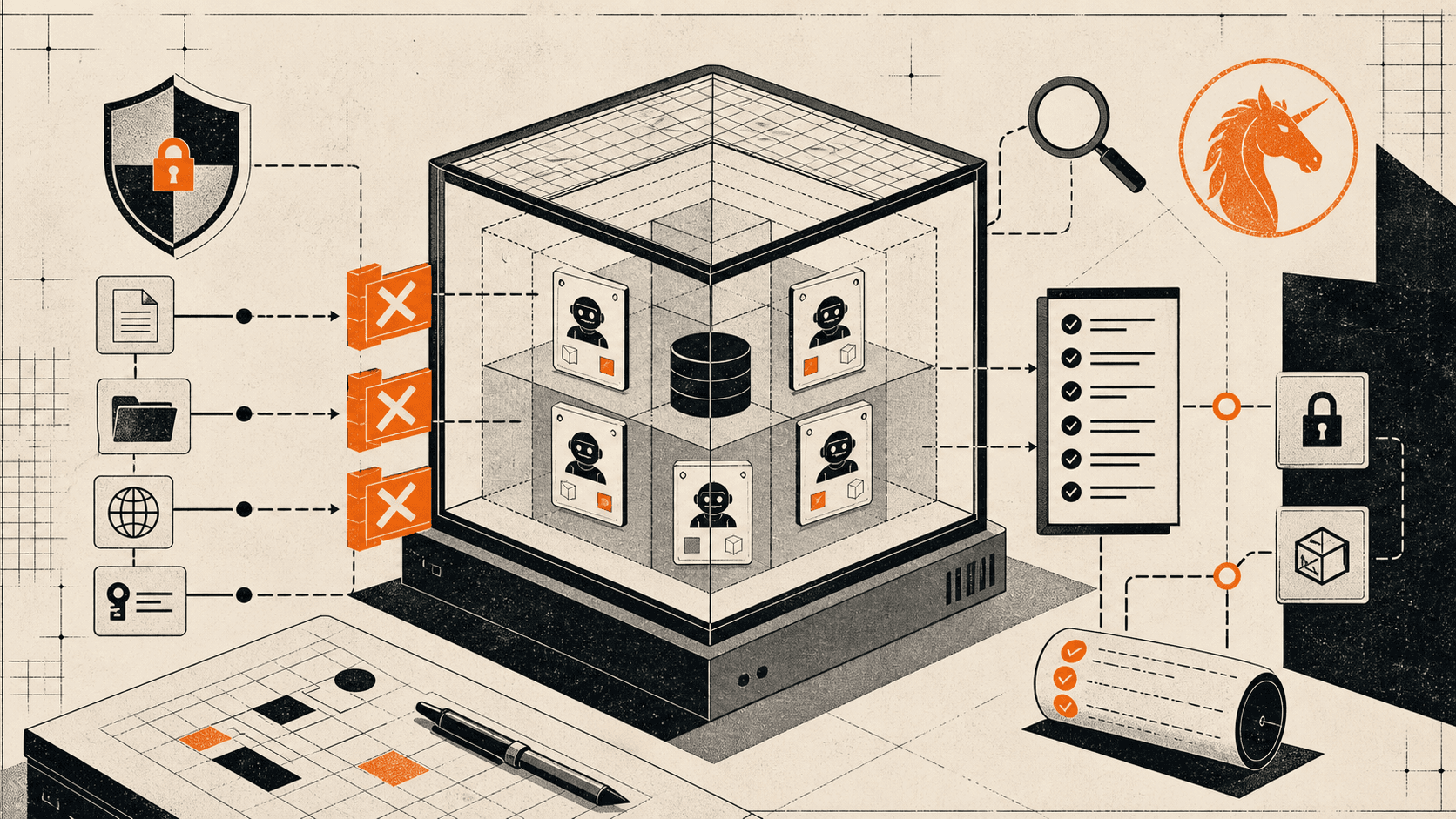
Microsoft Build 2026 and NVIDIA OpenShell made one thing clear: AI agent security is no longer only an enterprise compliance topic. It is a daily operating issue for solo founders.
AI Agent Security Is Not Just for Enterprises: Solo Founders Need Sandboxes Too
AI Summary
On June 2, 2026, Microsoft used Build 2026 to emphasize agent security and governance. Microsoft Execution Containers entered preview. Agent 365 for local agents extends control-plane ideas from Entra, Defender, and Purview to local agents. Microsoft also highlighted open trust-stack work such as ASSERT and Agent Control Specification. NVIDIA, in its own Microsoft Build coverage, described OpenShell as a secure runtime for autonomous agents, using sandboxing, policy, and outbound call checks to constrain agent behavior.
For solo founders, this is not just enterprise compliance news. If an agent can read customer files, edit code, send emails, or touch billing systems, its security boundary becomes your company boundary.
Key Facts
| Fact | Translation for solo founders |
|---|---|
| Microsoft Execution Containers provide OS-level containment for agent execution | Agents should not automatically receive whole-machine access |
| Agent 365 for local agents focuses on observing, governing, and securing local agents | Local automation needs logs and control planes too |
| NVIDIA OpenShell evaluates outbound calls before agents reach files, networks, or credentials | Agents can work, but they should not roam freely |
| Foundry hosted agents provide session sandboxes, persistent memory, and elastic scale | Production agents are starting to look more like cloud-native services |
Why Solo Founders Underestimate Agent Risk
Large companies worry about audits, regulators, and compliance exposure. Solo founders worry about simpler but very real failures: deleting the wrong files, emailing the wrong customer, leaking client material, pasting secrets into a chat window, or letting an agent modify the wrong branch.
The real danger is not that AI "wants" to cause harm. The danger is the combination of three normal operating habits:
- You give an agent too much access.
- The agent's actions are not logged.
- When something breaks, you cannot tell what changed.
That pattern is common in one-person companies because speed is the whole point. But an agent with tools, file access, API access, and network calls is no longer a chatbot. It is closer to a junior operator with system permissions.
A Solo Founder Agent Security Checklist
1. Give each agent the minimum required permission
A content agent does not need .env access. A support agent does not need full Stripe admin access. A research agent should not write to production databases. The smaller the permission surface, the smaller the blast radius.
2. Log every important action
At minimum, record the input, tools called, files read or written, output destination, and whether a human confirmed the result. Do not wait until something fails to wish you had logs.
3. Require human confirmation for high-impact actions
Payments, database deletion, mass email, production deploys, and contract changes should not be fully automatic. Agents can prepare drafts, inspect diffs, and recommend actions, but the final action should require human approval.
4. Separate production data from experiment data
Give agents a sandbox folder, test inbox, and test API keys. Do not start by letting a new workflow operate on real customer data.
Sources And Timeline
| Date | Source | Information used |
|---|---|---|
| 2026-06-02 | Microsoft Official Blog: Microsoft Build 2026 | Agent 365 for local agents, Microsoft Execution Containers, ASSERT, Agent Control Specification, and Foundry hosted agents |
| 2026-06-02 | NVIDIA Blog: Unified Stack for Agentic AI Deployment | NVIDIA OpenShell sandboxing, policy management, outbound call checks, and GitHub Copilot integration |
Bottom Line
Agent security does not slow you down. It protects your speed. Automation without boundaries eventually becomes an incident. Mature one-person companies will not avoid agents. They will run agents inside systems that are observable, reversible, and auditable.