
Field Note / e-39
AlphaSense SuperAnalyst: AI Research Moves From Answers to Workflow Execution
AlphaSense launched SuperAnalyst on June 3, 2026, pushing AI research from search and synthesis into always-on monitoring, multi-step execution, and source-linked decision outputs.
AlphaSense SuperAnalyst: AI Research Moves From Answers to Workflow Execution
AI Summary
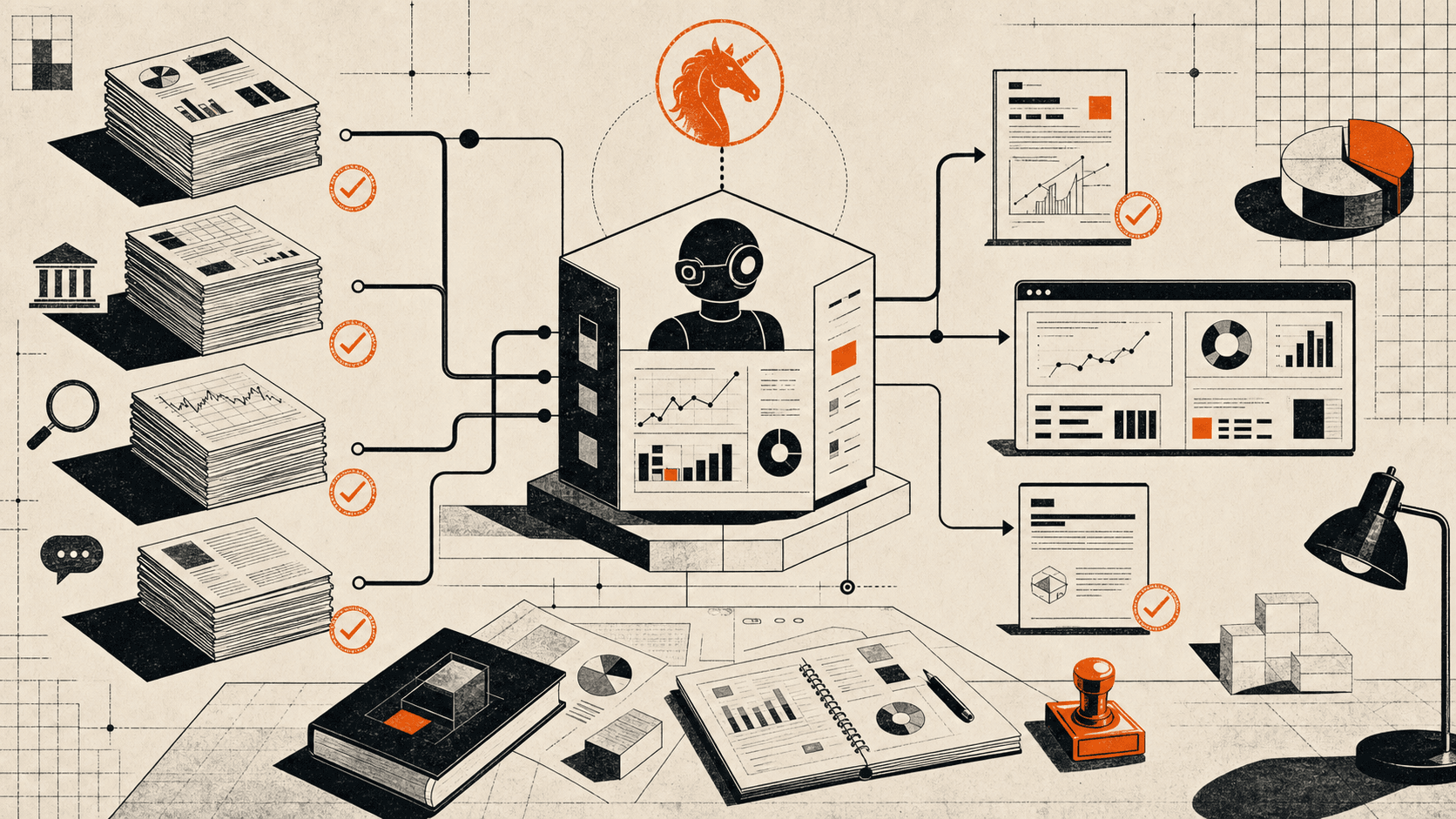
On June 3, 2026, AlphaSense introduced SuperAnalyst, positioning it as an always-on AI execution layer. The company described it as more than a question-answering tool. SuperAnalyst is designed to execute multi-step research, monitor market changes, produce decision-grade outputs, and ground those outputs in trusted and proprietary content across the AlphaSense platform.
Solo founders should pay attention because it marks a broader product shift: AI research tools are moving from search boxes to persistent analytical teammates.
Key Facts
| Fact | Why it matters |
|---|---|
| SuperAnalyst is designed to continuously execute financial and strategic workflows | Research is becoming an ongoing system, not a one-off query |
| It can produce investment briefs, earnings summaries, competitive intelligence reports, financial models, presentations, watchlists, and research memos | The output format is close to real analyst deliverables |
| AlphaSense emphasized source-linked intelligence and auditability | High-stakes decisions require traceable evidence |
| SuperAnalyst is currently available to select enterprise customers through early access | This is an enterprise market-intelligence product, not a consumer chatbot |
Why This Is Not Ordinary AI Search
Ordinary AI search answers the question, "What do I want to know right now?" SuperAnalyst points to a different question: "What do I need to track continuously, and what work should happen automatically when something changes?"
That distinction matters.
A solo founder may need to monitor competitors, customer industries, funding news, policy changes, SEO rankings, supply prices, hiring markets, and user feedback. The old workflow is to search whenever you remember. A better workflow is Google Alerts, RSS, newsletters, and a Notion database. But those tools rarely share memory, rarely know the project history, and rarely turn new information directly into decision material.
SuperAnalyst is a signal that research is becoming a persistent operating system.
Most solo founders will not start with an enterprise market-intelligence platform. But they can copy the architecture: trusted sources, continuous monitoring, project memory, auditable citations, and fixed output templates.
How Solo Founders Can Build a Lightweight Research Agent
1. Define the objects you monitor
Do not ask AI to "watch AI news." Define 10 to 30 concrete entities: competitors, customer industries, key people, investors, keywords, regulation topics, and distribution channels.
2. Rank source quality
Official blogs, SEC filings, and primary documents are first-class sources. Trade publications are useful context. Social media is a signal, not a conclusion. AI summaries should preserve source links.
3. Fix the output format
Use the same weekly template: what changed, why it matters, what action to take, what is still uncertain, and which sources support the conclusion. A stable format makes trends visible.
4. Preserve project memory
Every research theme should keep history. If the AI does not know last week's conclusion, it cannot reliably identify this week's change.
Sources And Timeline
| Date | Source | Information used |
|---|---|---|
| 2026-06-03 | AlphaSense Press: SuperAnalyst | Launch date, product positioning, capabilities, early access status, source-linked outputs, and auditability |
Bottom Line
One-person companies do not lack information. They lack systems for continuously processing information. SuperAnalyst shows that AI research is shifting from "ask faster" to "track continuously, execute workflows, and cite sources." The solo founder who systematizes research first will spot opportunities earlier and waste less time reacting to noise.