Field Note / e-37
After Microsoft Build 2026, the PC Is Becoming an AI Agent Workstation
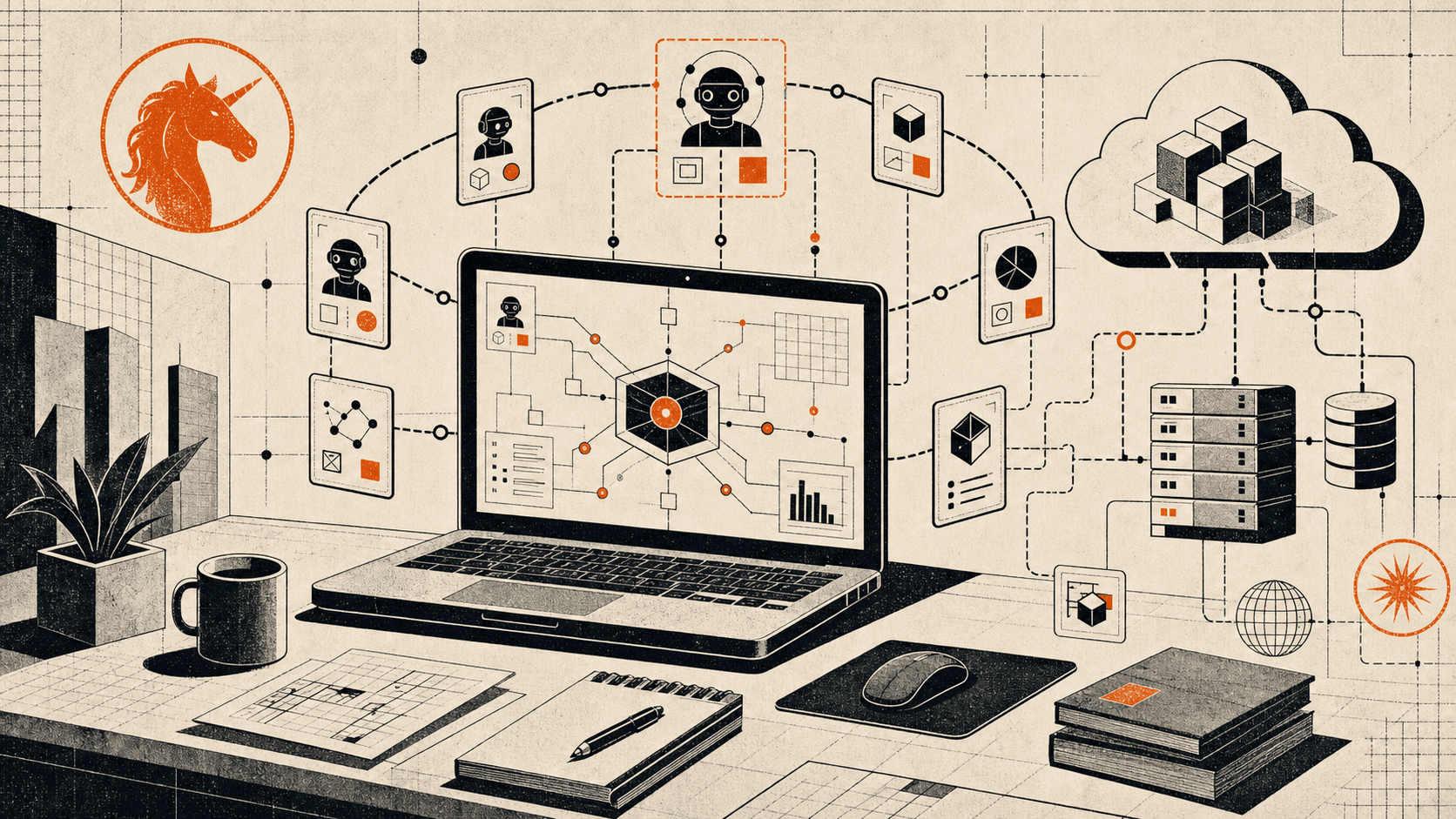
Microsoft Build 2026 and NVIDIA's June 2 announcements point to the same shift: AI agents are moving beyond cloud chat windows, and the personal computer is becoming a local execution workstation for solo founders.
After Microsoft Build 2026, the PC Is Becoming an AI Agent Workstation
AI Summary
On June 2, 2026, Microsoft used Build 2026 to announce a broad set of agent infrastructure for developers and enterprises: Microsoft IQ, Work IQ, Foundry Agent Service, Microsoft Execution Containers, a preview GitHub Copilot desktop app, and Agent 365 for local agents. NVIDIA announced a parallel Microsoft partnership around RTX Spark, DGX Station for Windows, OpenShell, and open models on Foundry.
For solo founders, the important signal is not "buy a bigger computer." The signal is that the PC is changing roles. It is moving from a place where you write documents and code into a workstation where you can run, isolate, supervise, and improve multiple agents.
Key Facts
| Fact | Why it matters |
|---|---|
| Microsoft described Windows as an agent-native runtime and put Microsoft Execution Containers into preview | Local agents need sandboxing, permissions, and controlled execution |
| Hosted agents in Foundry Agent Service entered preview | Cloud agents are getting session isolation, persistent memory, and elastic scale |
| The GitHub Copilot app entered preview | Agentic coding is moving from IDE plugin to desktop workflow |
| NVIDIA said RTX Spark targets personal agents, with 1 petaflop of AI performance and up to 128GB of unified memory | Local inference, tuning, and long-running agent tasks now have a clearer hardware path |
What This Means For One-Person Companies
Until recently, the solo founder AI stack usually had three loose layers: ChatGPT or Claude in the browser, cloud automation tools, and a local code editor. The problem is that these layers do not naturally share execution, logs, memory, or permissions.
AI can help you write code, but it may not be able to execute it safely. AI can read your files, but you may not know when it overreaches. AI can run a task, but the logs may be scattered across tools when something fails.
Build 2026 points in a different direction: agent workflows are moving into the operating system and developer platform layers.
That shift matters for three kinds of solo founders.
First, software founders can split agent work across Copilot sessions, git worktrees, test environments, and review flows. You are no longer only "asking a model." You are managing multiple controlled execution threads.
Second, content, research, and consulting founders can turn a local workstation into a recurring pipeline for research capture, filing, summarization, reporting, and client deliverables. When private notes, customer files, or financial models are involved, local sandboxing is more controllable than dropping everything into a third-party web tool.
Third, vertical AI tool builders need to notice where users will invoke agents. Future customers may call your product from the desktop, IDE, terminal, enterprise assistant, or procurement system, not only from your SaaS UI. Products without APIs, MCP support, permission boundaries, and audit trails will be harder to plug into that world.
Three Moves Solo Founders Can Make Now
- Convert prompts into executable jobs. "Generate a competitor monitoring report every Friday" is more agent-ready than "look at competitors."
- Define file permissions, network permissions, and output formats for every agent, even if the first version is just a local script.
- Log each automated task: inputs, outputs, failure reasons, and human edits. Those logs become your operating manual when you later move to Foundry, Copilot, OpenShell, or another agent platform.
Sources And Timeline
| Date | Source | Information used |
|---|---|---|
| 2026-06-02 | Microsoft Official Blog: Microsoft Build 2026: Be yourself at work | Microsoft IQ, Work IQ, Web IQ, Microsoft Scout, Agent 365, MXC, Foundry Agent Service, and GitHub Copilot app announcements |
| 2026-06-02 | NVIDIA Blog: Unified Stack for Agentic AI Deployment | RTX Spark, DGX Station for Windows, NVIDIA OpenShell, Foundry models, and the local-to-cloud agent deployment path |
Bottom Line
The next phase of AI agents is not "better chat." It is controlled execution. For one-person companies, that is a big deal. As the PC becomes an agent workstation, the founder's job shifts from doing every step by hand to designing tasks, setting boundaries, reviewing outputs, and improving the system.