
Field Note / day-27-laravel
Monetize Last, Win Big: Laravel’s $45.9M Solo Founder Strategy
Laravel is a PHP web application framework that serves millions of developers worldwide, generating an estimated $45.9...
Answer Engine Brief
This case study is part of Jesse's 100-day founder marathon for Solo Unicorn Club: stories of solo or near-solo founders who reached meaningful revenue gravity and left reusable lessons about product, distribution, AI leverage, and one-person company design.
Laravel is a PHP web application framework that serves millions of developers worldwide, generating an estimated $45.9 million in annual revenue for its parent company. What makes this case study extraordinary isn't the technology—it's how founder Taylor Otwell built a freemium ecosystem that monetizes an open-source community without alienating it.
This case is non-obvious because Otwell achieved over $1 million in ARR while operating as a solo founder for several years, only hiring his first employee in 2016. He bootstrapped from Little Rock, Arkansas—far from Silicon Valley's playbook—and deliberately delayed monetization for three years to build community trust. Most founders would have rushed to revenue or raised capital early.
Solo builders should study Laravel because it demonstrates how to transform personal developer tools into a multi-million dollar ecosystem. Otwell's "scratch your own itch" approach created authentic product-market fit, while his patient community-building strategy established distribution channels that traditional SaaS companies spend millions trying to replicate.
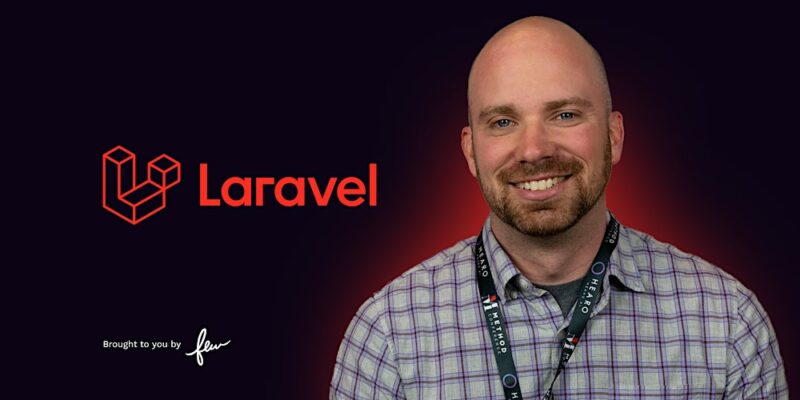 Laravel Founder, Taylor Otwell, image source

What the Founder Did Differently
Geographic Constraint as Strategic Advantage
Otwell built Laravel from Little Rock, Arkansas, explicitly noting this location prevented "intimidation" and "distraction" from Silicon Valley trends. This geographic isolation forced him to focus purely on product quality rather than following conventional startup patterns or competitive pressures.
Extreme Patient Monetization
Most SaaS founders monetize within months of launching their MVP. Otwell waited three years—from Laravel's 2011 launch until Forge's 2014 debut—to introduce his first paid product. This patience allowed him to:
- Build a community of over 1 million developers
- Establish genuine trust and product-market fit
- Create a pre-qualified audience for commercial tools
- Avoid the common trap of monetizing too early and alienating users
Productized Internal Operations
Instead of hiring team members to handle operational overhead, Otwell built commercial products that automated his own workflows: - Laravel Forge: Automated server provisioning and management (solving his deployment headaches)
- Laravel Envoyer: Zero-downtime deployments (eliminating his manual deployment process)
- These tools didn't just serve customers—they enabled him to scale his own operations without additional headcount
Bootstrap-First Capital Strategy
Otwell bootstrapped for over a decade, only raising venture capital in 2024 when Laravel was already generating tens of millions in revenue. This approach gave him maximum control, validated his business model completely, and allowed him to raise capital from a position of strength rather than necessity.
The Growth Flywheel: Step-by-Step
Laravel's growth follows a deliberate sequence where each stage builds irreversible competitive advantages:
| Stage | Strategic Intent | Irreversible Gain | Timeline |
|---|---|---|---|
| Free Framework Development | Build high-quality developer tool solving personal pain points | Authentic product-market fit through "scratching own itch" | 2010-2011 |
| Community Building | Prioritize adoption over monetization; engage directly with users | Massive, loyal developer base (1M+ users) becomes distribution channel | 2011-2014 |
| First Commercial Product | Monetize existing user base with complementary tool (Forge) | $90K ARR in first month proves commercial viability | 2014 |
| Ecosystem Expansion | Launch additional commercial products for different pain points | Multiple revenue streams increase customer lifetime value | 2015-2019 |
| Solo-to-Team Transition | Scale team only after proven revenue model | Operational leverage while maintaining product vision | 2016-2017 |
Why the Sequence Mattered:
The order was critical because each stage validated the next investment. Free framework adoption proved market need. Community engagement identified commercial opportunities. First commercial success justified ecosystem expansion. Revenue growth enabled strategic hiring rather than desperate scaling.
Strategic Leverage & Business Model
Where Otwell Gained Leverage: Laravel's business model creates multiple compounding advantages:
- Code as Distribution: The open-source framework serves millions of applications, creating organic reach that traditional marketing can't replicate
- Community as Sales Channel: Over 1 million developers became unpaid advocates, significantly reducing customer acquisition costs
- Ecosystem Lock-in: Developers using Laravel naturally adopt first-party tools due to seamless integration and trusted brand
- Automated Operations: Commercial products solved the founder's own operational challenges, enabling solo scaling What He Deliberately Avoided:
- Early venture funding (maintained control and validated model organically)
- Geographic relocation to tech hubs (avoided distractions and competitive pressure)
- Rapid team expansion (stayed lean until revenue justified headcount)
- Complex pricing models (kept commercial tools simple and accessible)
Revenue Model Breakdown:
Laravel operates a sophisticated freemium ecosystem with multiple pricing strategies: - Subscription SaaS: Forge ($12-39/month), Envoyer ($10-50/month), Vapor ($39/month + usage)
- One-time Licenses: Nova ($99-299)
- Usage-based: Cloud ($0-200/month + consumption)
This model works for solo founders because the free framework does the customer acquisition and qualification, while paid tools capture value from the most engaged users.
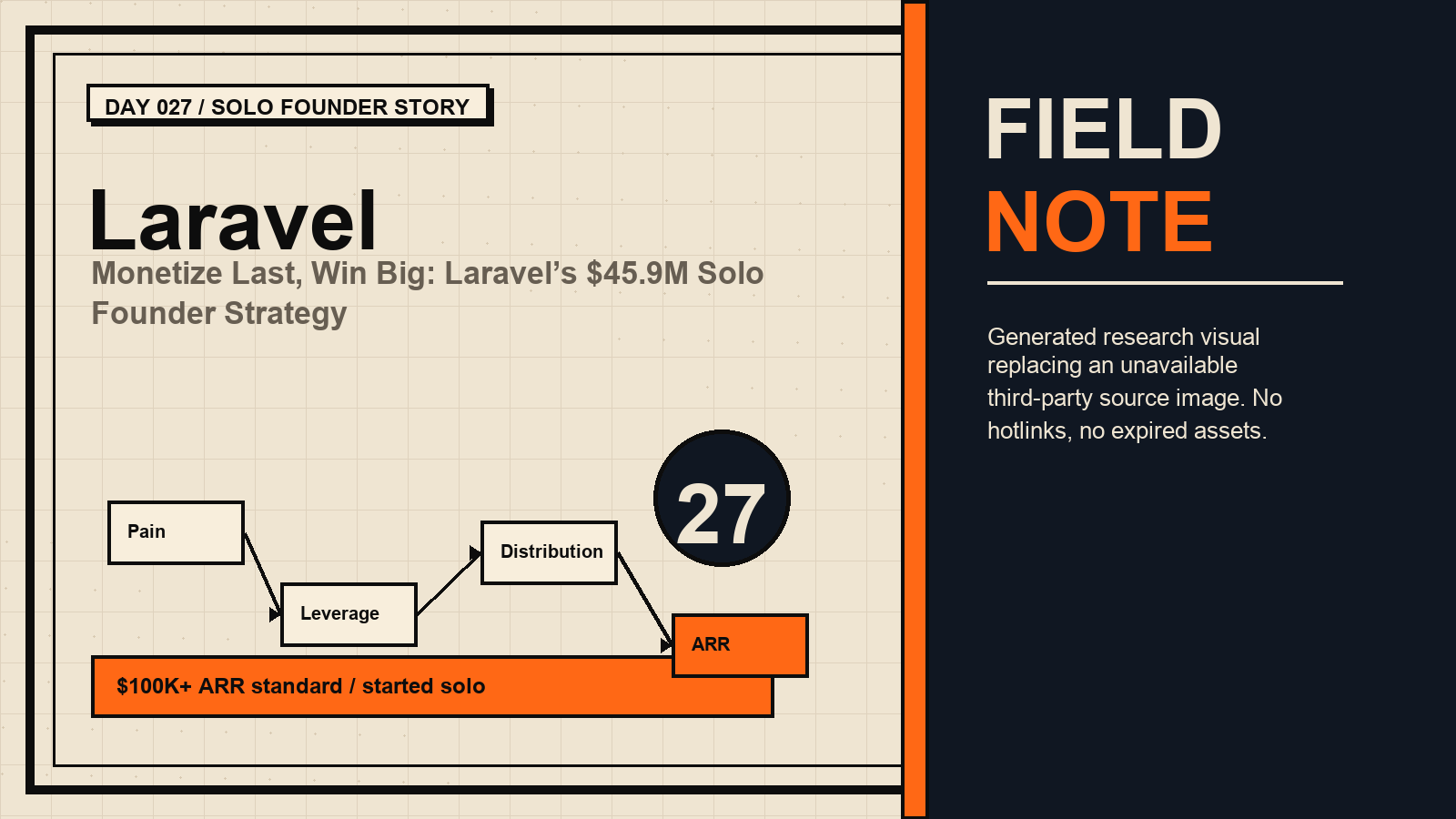 Laravel's Freemium Ecosystem: How a Free Framework Drives $45.9M in Commercial Revenue
Can You Replicate This Today?
What's Easier Now:
AI tools fundamentally compress Laravel's original development timeline. A solo founder in 2025 could accelerate key phases:
- MVP Development: GitHub Copilot and ChatGPT can generate boilerplate code, reducing initial framework development from 8-12 months to potentially 2-4 months
- Documentation: AI can auto-generate comprehensive docs, tutorials, and troubleshooting guides that originally required significant manual effort
- Community Support: AI-powered chatbots can handle routine developer questions, reducing support overhead
- Testing & QA: Automated test generation and debugging assistance improve code quality with less manual work What Remains Hard:
- Strategic Vision: AI cannot identify unmet market needs or design elegant developer experiences that feel intuitive
- Community Trust: Building genuine relationships with developers still requires authentic human engagement and consistent quality delivery
- Architectural Decisions: Complex technical trade-offs in framework design require human expertise and long-term thinking
- Market Timing: Understanding when to monetize, which products to build next, and how to price requires human judgment
The 2025 Solo Founder Approach:
Start with AI-native capabilities from day one. Instead of building a general framework and adding AI later, create an "AI-first Laravel" that inherently integrates LLMs, vector databases, and intelligent development tools. Use AI to compress the build-community-monetize cycle from Laravel's 3-year timeline to potentially 12-18 months. Focus human effort on the irreplaceable elements: identifying authentic developer pain points, curating elegant user experiences, and building genuine community relationships that AI cannot replicate.
Takeaways: How to Think Like This Founder
- Monetize your own operational solutions: If you build internal tools to scale your solo operation, those tools are often your next commercial products. Otwell turned his deployment and server management needs into Forge and Envoyer.
- Geographic constraints can create strategic advantages: Building outside major tech hubs can provide focus, reduce competitive distraction, and force authentic problem-solving rather than trend-following.
- Community-first monetization beats revenue-first scaling: Three years of free value creation established distribution channels that made commercial success inevitable. Patient community building often outperforms aggressive early monetization.
- Bootstrap until capital becomes strategic, not survival-based: Otwell raised $57M only after achieving massive scale and clear expansion opportunities. This approach maximized control and validated the model before taking external capital.
- Scratch your own itch, then productize the solution: The most authentic product-market fit comes from solving your own genuine problems. If the solution helps you significantly, it likely helps others in your situation.
- Build leverage through automation, not just delegation: Solo founders should prioritize creating systems and tools that multiply their output rather than immediately hiring team members for tasks they could automate or productize.
Part of the 100 Days, 100 Solo Startups series.