
Field Note / day-28-podcastle
From Chrome Extension to $29M: How Arto Yeritsyan Engineered Podcastle’s AI Growth Flywheel
Podcastle is an AI-powered content creation platform that helps podcasters, marketers, and teams record, edit, and...
Answer Engine Brief
This case study is part of Jesse's 100-day founder marathon for Solo Unicorn Club: stories of solo or near-solo founders who reached meaningful revenue gravity and left reusable lessons about product, distribution, AI leverage, and one-person company design.
Podcastle is an AI-powered content creation platform that helps podcasters, marketers, and teams record, edit, and distribute professional audio and video content. What started as a simple Chrome extension in 2020 has grown into a comprehensive platform serving over 1 million creators with an estimated $29.6M in annual revenue.
This case is worth studying because it demonstrates how a technical founder can build a massive business by starting with the smallest possible solution, then systematically expanding based on user behavior. Unlike typical "move fast and break things" startups, Arto Yeritsyan built Podcastle through disciplined iteration and strategic positioning in an emerging AI market.
Solo founders should pay attention to this pattern because it shows how to compete against well-funded competitors by focusing on workflow integration rather than flashy features. Yeritsyan's approach of "start narrow, expand systematically" is highly replicable in today's AI-powered landscape.
 Podcastle's impressive growth trajectory from a simple Chrome extension in 2020 to an estimated $29.6M revenue platform in 2025, showing user base expansion from 0 to 1.2M creators
What the Founder Did Differently
Arto Yeritsyan approached the market with a systems mindset rather than a product mindset. Instead of building a comprehensive podcasting tool from day one, he started with the smallest possible wedge into the market. The Constraint-Driven Advantage:
- Technical Background: As former VP of Engineering at PicsArt, Yeritsyan had deep experience with AI/ML and product scaling
- Geographic Arbitrage: Operating from Armenia provided significant cost advantages while serving global markets
- Resource Limitations: Starting with minimal funding forced extreme focus on solving real user problems Early Strategic Choices That Created Leverage:
- Browser-first approach: Building a Chrome extension eliminated distribution friction and app store dependencies
- AI-native from day one: Leveraged text-to-speech when few competitors were exploring AI applications
- Freemium model: Created viral growth loops without requiring marketing spend
- Platform agnostic: Started by enhancing existing content rather than requiring users to change their entire workflow
The key insight: Yeritsyan didn't try to replace existing tools. He started by making existing content more accessible, then gradually expanded his platform's capabilities based on user behavior patterns.
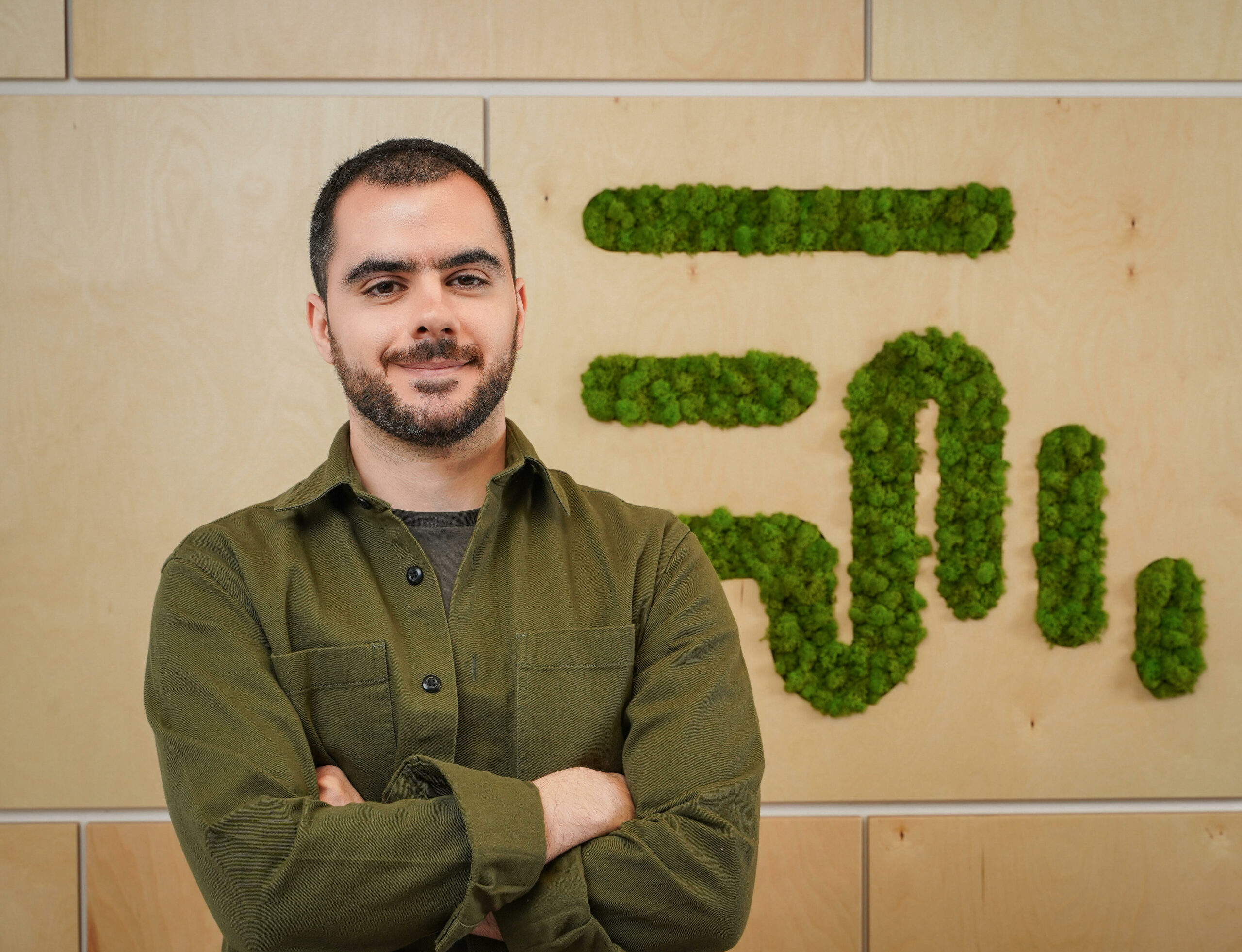
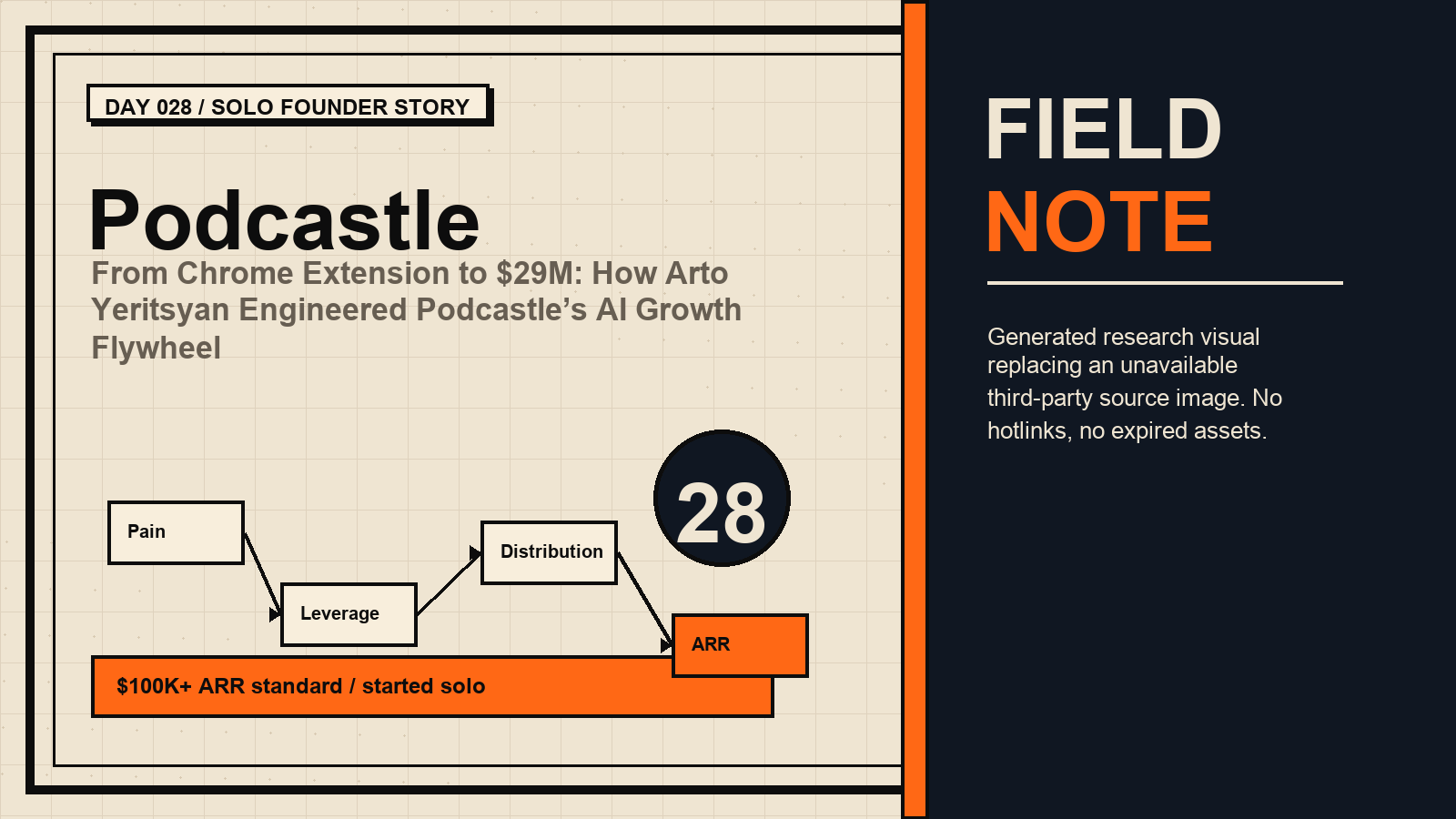
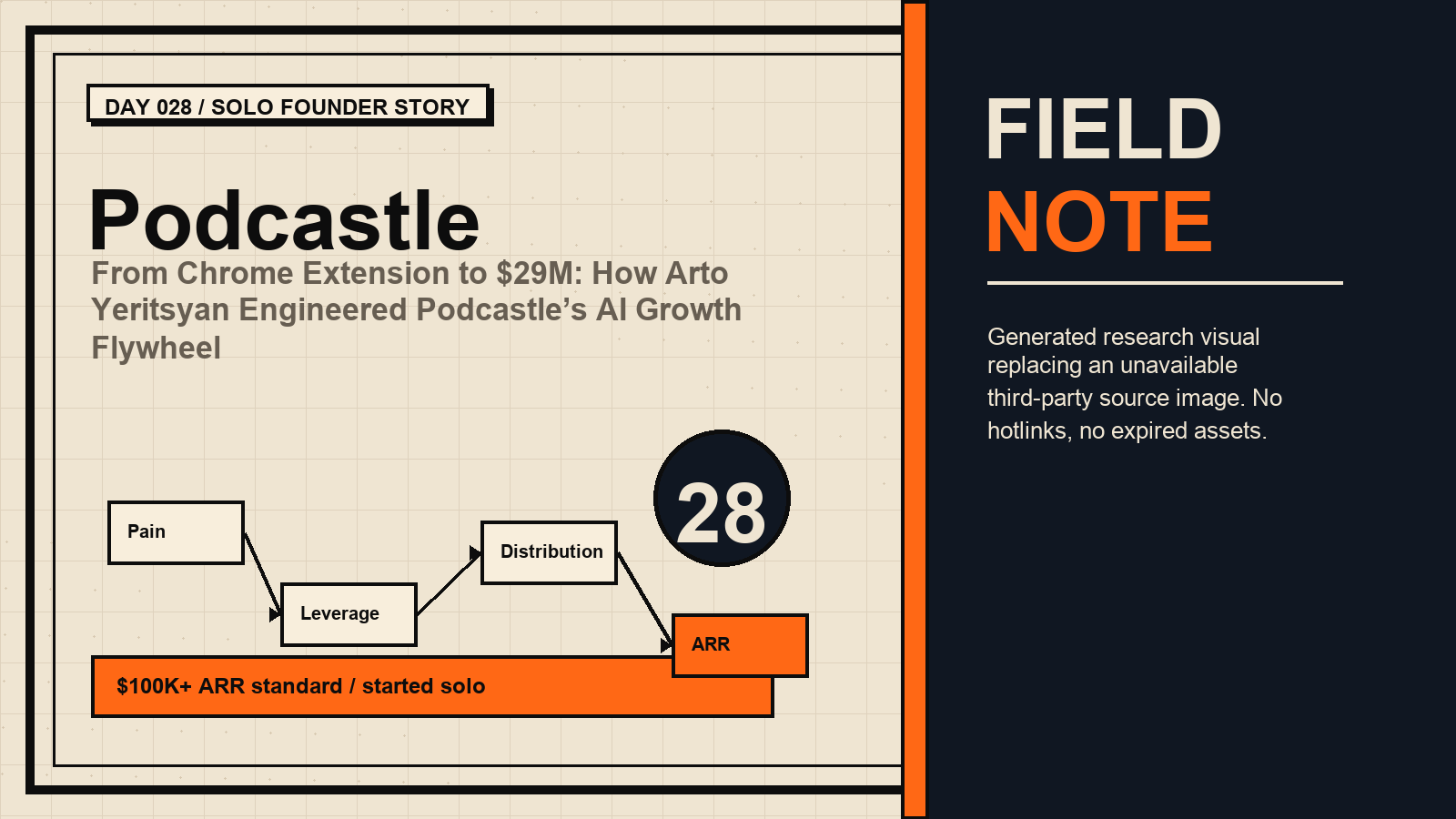
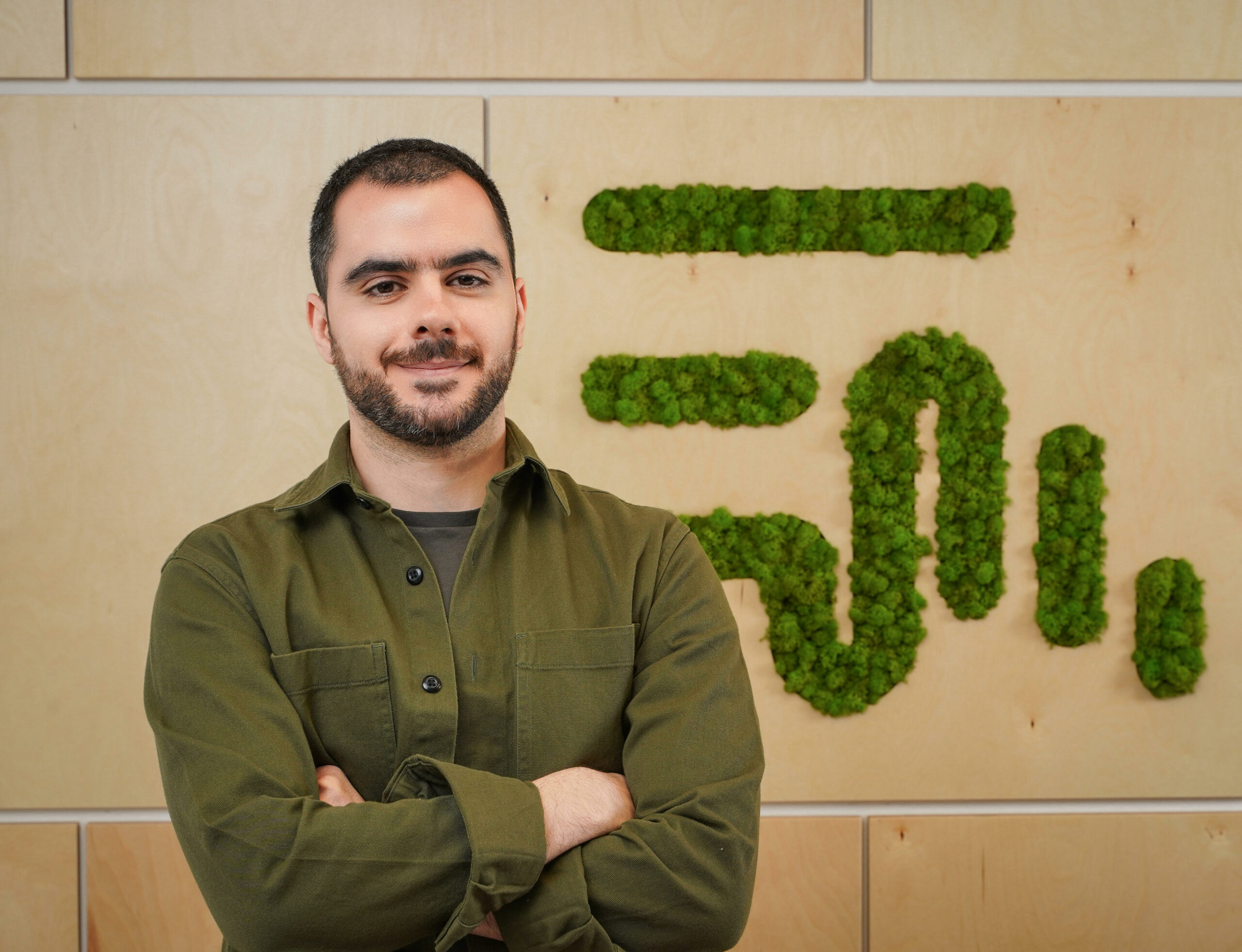 Podcastle.ai founder Artavazd Yeritsyan, image source.
The Growth Flywheel: Step-by-Step
Podcastle's evolution followed a deliberate sequence where each stage built irreversible advantages for the next:
| Stage | Strategic Intent | Execution | Irreversible Gain |
|---|---|---|---|
| 2020: Chrome Extension | Validate AI text-to-speech demand | Simple article-to-audio converter | Proof of AI/audio product-market fit |
| 2021: Recording Tools | Expand from consumption to creation | Added podcast recording capabilities | User base of active creators (150K) |
| 2022: Full Platform | Become workflow destination | Integrated editing, hosting, distribution | Platform lock-in and user data |
| 2023: AI Features | Build competitive moats | Launched voice cloning, Magic Dust AI | Proprietary AI models and features |
| 2024: Team Collaboration | Enterprise expansion | Multi-user features, business plans | B2B revenue streams and higher LTV |
Key Inflection Points:
- 60,000 downloads in first two months validated the core premise
- User behavior shift: People weren't just consuming audio—they were sharing and creating
- AI capabilities advancement: GPT improvements made sophisticated features possible
- Enterprise demand: Teams began requesting collaboration features organically The sequence mattered because each stage provided data and resources to fund the next expansion. Yeritsyan never had to make big bets without validation.
Strategic Leverage & Business Model
Podcastle's leverage comes from three compounding advantages that become stronger over time: Primary Leverage Points:
- Data flywheel: More users create better AI models, which attract more users
- Platform consolidation: Each new feature increases switching costs for existing users
- Geographic arbitrage: Armenian development costs with global pricing power What Yeritsyan Deliberately Avoided:
- Raising large funding rounds early (bootstrapped for years)
- Building custom hardware or complex infrastructure
- Competing on price alone
- Hiring large teams before finding product-market fit Business Model Breakdown:
| Tier | Monthly Price | Target Market | Key Strategy |
|---|---|---|---|
| Free | $0 | User acquisition | Viral growth, feature sampling |
| Storyteller | $14.99 | Regular creators | Core monetization tier |
| Pro | $29.99 | Professional podcasters | Advanced AI features |
| Business | $39.99+ | Teams/Enterprise | Custom solutions, higher LTV |
 Analysis of Podcastle's key strategic advantages and their competitive defensibility, highlighting how the all-in-one platform and AI features create the strongest moats
The model works for solo founders because it's entirely software-based with high gross margins (estimated 80%+), predictable recurring revenue, and global distribution through web browsers. The freemium tier handles customer acquisition, while AI features justify premium pricing.
Analysis of Podcastle's key strategic advantages and their competitive defensibility, highlighting how the all-in-one platform and AI features create the strongest moats
The model works for solo founders because it's entirely software-based with high gross margins (estimated 80%+), predictable recurring revenue, and global distribution through web browsers. The freemium tier handles customer acquisition, while AI features justify premium pricing.
Can You Replicate This Today?
A solo founder could absolutely rebuild this faster today, but the competitive landscape has changed significantly. What's Easier Now:
- AI infrastructure: OpenAI APIs, Anthropic Claude, and other models eliminate the need to build foundational AI from scratch
- No-code tools: Platforms like Bubble, Webflow, or even GPT-4 code generation could accelerate development
- Distribution: Social media and content marketing are more sophisticated
- Payment processing: Stripe, LemonSqueezy, and similar tools handle global payments seamlessly What's Still Hard:
- Market education: Users now expect AI features, raising the bar for differentiation
- Competition: Well-funded competitors like Descript, Riverside, and others have established positions
- AI costs: While APIs are accessible, usage costs can scale quickly with user growth Different Approach for 2025:
- Start with a specific AI workflow (e.g., "AI-powered interview prep for podcasters")
- Use GPT-4 + fine-tuning for custom voice/editing features
- Launch with team collaboration built-in from day one
- Focus on integration with existing tools (Notion, Slack, etc.) rather than replacement
The core strategy—start small, expand systematically—remains highly applicable. The key is finding an underserved workflow within the broader content creation space.
 Six common SaaS pricing models, including flat rate, usage-based, tiered, per user, per feature, and freemium, visualized in an infographic.
Takeaways: How to Think Like This Founder
- Start with the smallest possible wedge: Don't build a comprehensive solution immediately. Find one specific workflow you can improve dramatically, then expand based on user behavior.
- Leverage geographic arbitrage: Building from lower-cost locations while serving global markets provides sustainable competitive advantages that VCs can't easily replicate.
- Make AI a feature, not the product: Users don't buy AI—they buy better outcomes. Focus on workflow improvements that happen to use AI rather than AI capabilities themselves.
- Use freemium as a data collection strategy: Free users provide usage patterns and feedback that inform your roadmap. The goal isn't just conversion—it's learning what features drive retention.
- Build platform lock-in through data, not contracts: Each project users create in your platform increases switching costs organically. Focus on becoming part of their creative process rather than just a tool they use.
- Expand through user behavior signals: Watch what users try to do with your current product that it can't handle well. Those gaps are your next features, not your initial roadmap. Part of the 100 Days, 100 Solo Startups series.